Ginger is the most studied rhizome in digestive phytotherapy, with more than 100 randomized controlled trials conducted since the 1980s on nausea, inflammatory pain and migraine. The evidence behind ginger benefits centers on effects confirmed by controlled trials, the doses actually tested and the precautions to know before taking it as a supplement.
In brief – Ginger benefits confirmed by randomized trials include three main uses: reducing nausea from chemotherapy and pregnancy, easing knee osteoarthritis pain and relieving migraine attacks with efficacy comparable to sumatriptan. A 2015 meta-analysis of 593 osteoarthritis patients reports a moderate but significant reduction in pain (Bartels et al., Osteoarthritis and Cartilage). For pregnancy nausea, a synthesis of 12 trials (1,278 women) confirms efficacy without an increased risk of miscarriage. The most studied dose remains 1 g of dried powder per day, split across several intakes. Ginger is still not recommended in combination with anticoagulant treatment without medical advice, due to a risk of interaction.
Definition
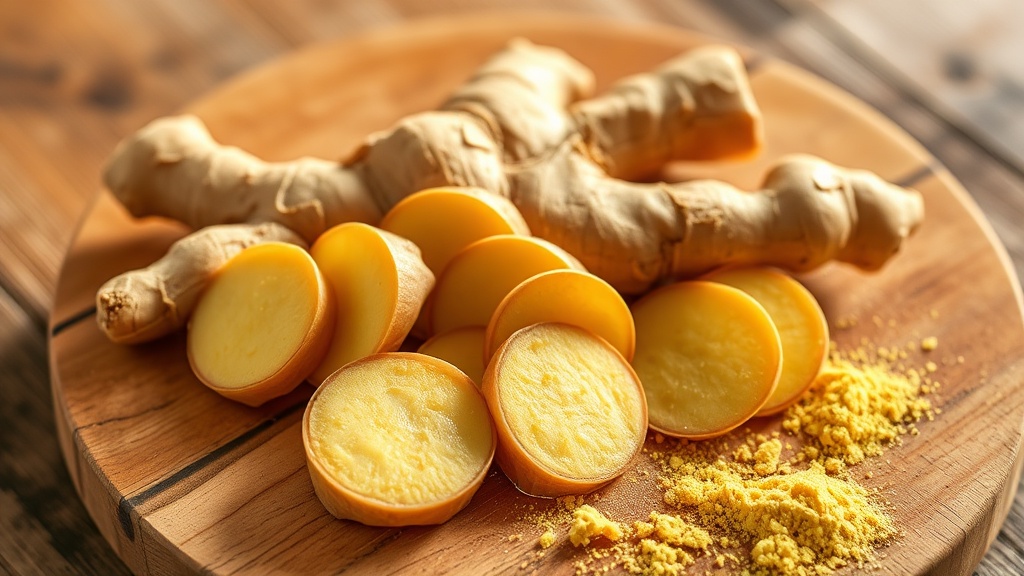
Ginger refers to the rhizome of Zingiber officinale, a herbaceous plant native to Southeast Asia now grown in India, China and Nigeria, the world’s leading producers. In cooking as in phytotherapy, only the underground rhizome is used: fresh, dried into powder, or as a standardized extract in capsules. The European Pharmacopoeia classifies it among traditional medicinal plants, with recognized use against nausea and minor digestive disorders.
Mechanism and composition
Ginger’s activity stems from two families of active compounds, present in varying proportions depending on whether the rhizome is fresh or dried:
- Gingerols: dominant in the fresh rhizome, they act on the intestine’s serotonin 5-HT3 receptors, which explains the antinausea effect documented in chemotherapy and early pregnancy.
- Shogaols: formed from the dehydration of gingerols during drying or cooking, they inhibit the production of prostaglandins and pro-inflammatory cytokines, a pathway shared with nonsteroidal anti-inflammatory drugs but of weaker intensity.
- Effect on digestive motility: ginger speeds up gastric emptying in healthy individuals, a mechanism distinct from its central antinausea action.
What the science says about ginger benefits
For chemotherapy-related nausea, a multicenter trial of 576 patients shows that 0.5 to 1 g per day significantly reduces the severity of acute nausea on the first day of treatment, alongside standard antiemetics (Ryan et al., 2012). In pregnant women, a synthesis of 12 randomized trials (n=1,278) confirms a significant improvement in first-trimester nausea, with no serious adverse effect reported and no increased risk of miscarriage (Viljoen et al., 2014).
For joint pain, a meta-analysis of 5 placebo-controlled trials (593 knee osteoarthritis patients) reports a moderate but significant reduction in pain and functional discomfort, though with twice as many treatment withdrawals as placebo, mainly for digestive discomfort (Bartels et al., 2015). For migraine, a randomized double-blind trial in 100 patients shows comparable efficacy between 250 mg of powder and sumatriptan, with fewer adverse effects (4% versus 20%) (Maghbooli et al., 2014). For menstrual pain, a controlled trial in young university women reports a significant decrease in the intensity of menstrual pain with 500 mg of rhizome powder compared with placebo (Rahnama et al., 2012). According to Dr. Belghiti, these results point to a well-documented add-on use rather than a stand-alone treatment: ginger complements existing care, it does not replace it.
Ginger benefits in practice
Ginger fits specific situations rather than systematic daily use: nausea linked to treatment or travel, mild to moderate joint pain, or an occasional migraine attack. It is part of a broader approach to nutrition in support of healthy aging, alongside other anti-inflammatory levers discussed in our feature on chronic inflammation. People with osteoarthritis may find a well-documented complement here, not to be confused with adaptogenic plants such as ashwagandha, whose mechanisms and indications differ.
| Indication | Studied dose | Observed effect | Level of evidence |
|---|---|---|---|
| Chemotherapy-related nausea | 0.5 to 1 g/day | Reduced severity of acute nausea | High (trial, n=576) |
| Pregnancy nausea | About 1 g/day, 4 days | Improved nausea, no clear effect on vomiting | Moderate (meta-analysis, 12 trials) |
| Knee osteoarthritis pain | 0.5 to 1 g/day | Moderate reduction in pain and discomfort | Moderate (meta-analysis, 5 trials) |
| Migraine attack | 250 mg, single dose | Efficacy close to sumatriptan | Moderate (1 randomized trial) |
| Menstrual pain | 500 mg, 3 times/day | Reduced pain intensity | Moderate (1 controlled trial) |
Protocol and tips
The protocols tested in research converge on a few practical benchmarks:
- Nausea: 1 g of dried powder per day, split into 3 to 4 intakes, started before symptoms appear when possible (travel, scheduled chemotherapy).
- Osteoarthritis: 0.5 to 1 g per day continuously, with reassessment at 4 to 6 weeks; stop if digestive discomfort persists.
- Form: standardized dried powder is the best-documented form in clinical trials, ahead of liquid extract or grated fresh root.
- Interactions: ask a healthcare professional before combining with anticoagulant or antiplatelet treatment, since a moderate antiplatelet effect may increase bleeding risk (see MedlinePlus on precautions related to herbal supplements).
Frequently asked questions
What dose of ginger is used for nausea?
The positive clinical trials most often use 1 g of dried powder per day, split into 3 to 4 spaced intakes. This dose was tested in chemotherapy and early pregnancy, with a significant reduction in nausea severity compared with placebo, and no serious adverse effect reported at the doses studied.
Is ginger well tolerated during pregnancy?
Used at traditional doses against first-trimester nausea, ginger does not increase the risk of miscarriage according to available trials. Prolonged use or higher doses have not been evaluated with the same level of evidence: advice from a midwife or doctor remains necessary before any self-medication, particularly in late pregnancy.
Can ginger be combined with anticoagulants?
The combination is not recommended without medical advice. Ginger has a moderate antiplatelet effect that may potentiate an anticoagulant or antiplatelet treatment, increasing the risk of bleeding. A healthcare professional should be consulted before any use, including as a dietary supplement.
How long should ginger be taken for osteoarthritis?
The trials showing an effect on knee osteoarthritis pain cover durations of 4 to 12 weeks, at a dose of 0.5 to 1 g per day. The effect remains moderate compared with placebo, and digestive discomfort is the main reason for discontinuation reported in these studies.
Fresh or powdered ginger: what is the difference?
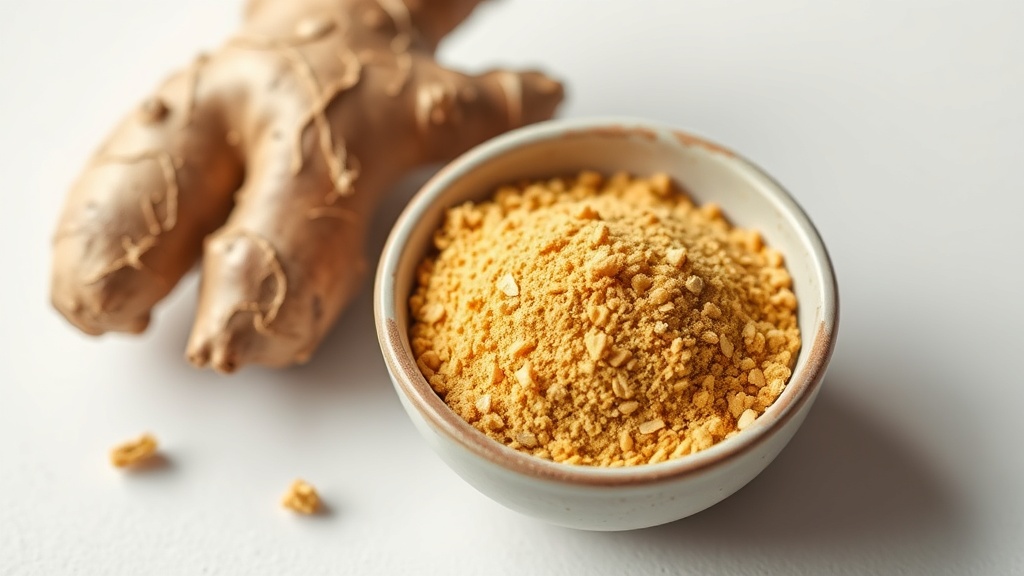
Fresh rhizome contains more gingerols, compounds linked to the antinausea effect. Drying converts part of these gingerols into shogaols, which have more pronounced anti-inflammatory properties. Clinical trials almost all use standardized dried powder rather than fresh root, whose active compound content varies more. This shift toward shogaols is one reason ginger benefits differ slightly between fresh and dried forms.
Medical disclaimer. The information provided here is for informational purposes only and does not constitute medical advice. It does not replace a consultation. Ask a healthcare professional before changing your diet, taking dietary supplements or starting a new practice, especially if you have a medical condition, are pregnant or are under treatment. Dietary supplements do not replace a balanced diet or medical follow-up.