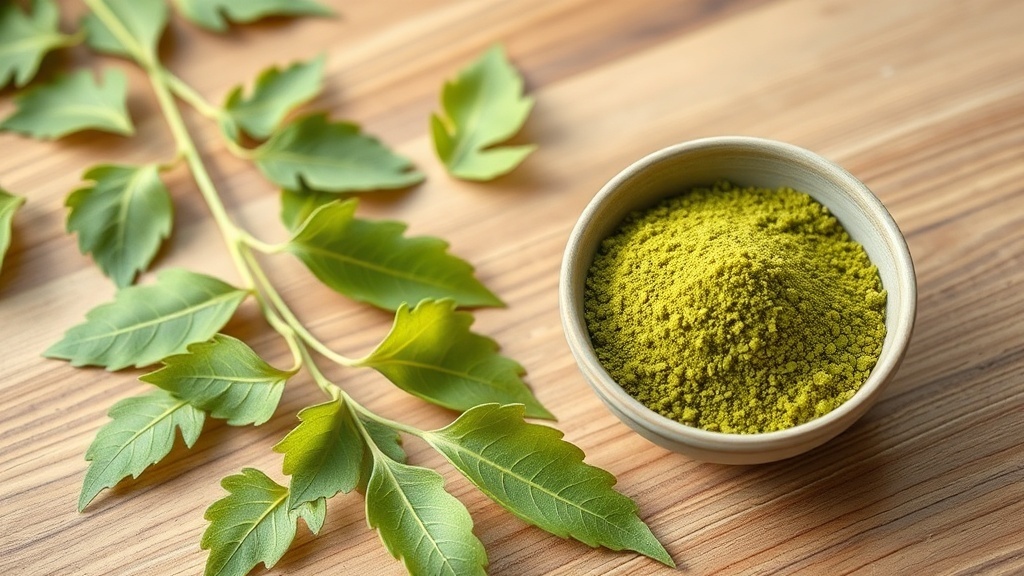
Moringa (Moringa oleifera) is a plant native to the foothills of the Himalayas, now cultivated throughout the tropics for its leaves, which are rich in vitamins, minerals and antioxidant compounds. Consumed as a powder, in capsules or as a tea, it has drawn nutrition research interest for about fifteen years for its potential effects on blood sugar, blood pressure and oxidative stress. The moringa benefits reported in this body of work stay modest, however: the clinical trials available in 2026 remain few and underpowered.
In brief – Moringa benefits for blood sugar, cholesterol and oxidative stress remain unproven in the best available trials, even though the plant’s dried leaf powder is a genuine source of iron, calcium, vitamin C and antioxidant polyphenols. Randomized trials in overweight or diabetic adults have tested doses from 2 to 60 grams per day for 2 to 12 weeks. A 2025 meta-analysis of 9 trials (Crisan et al., Nutrients) found no significant effect on fasting blood sugar, HbA1c or the lipid profile, with an overall evidence level rated very low under the GRADE system. A signal appears for the post-meal blood sugar response and for acute markers of oxidative stress, but no study confirms a lasting cardiometabolic benefit. Leaf powder is generally well tolerated at food-level doses; the root, bark and flowers should be avoided, particularly during pregnancy.
What is moringa?
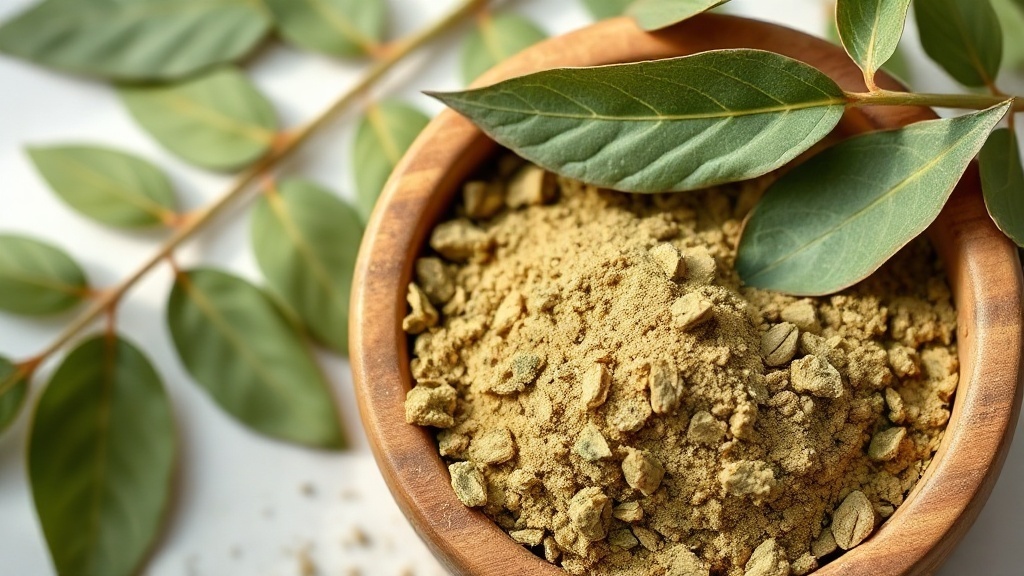
This plant, widely praised in popular nutrition writing for its nutrient density, now grows across sub-Saharan Africa, India and Latin America. Every part of the plant has a traditional use, but only the leaves are considered suitable for everyday consumption. Dried and ground, they yield a green powder rich in plant protein, iron, calcium, vitamin C and phenolic compounds such as quercetin and chlorogenic acid. Capsules and standardized extracts concentrate these same compounds in a more potent form than the raw powder.
Composition and possible mechanisms
The nutritional interest of moringa lies in the micronutrient density of its leaves rather than in a single active molecule. The main compounds identified in the literature include:
- Polyphenols and flavonoids (quercetin, chlorogenic acid) with antioxidant activity measurable both in vitro and in vivo.
- Isothiocyanates, including glucomoringin, studied in the lab for anti-inflammatory properties.
- Iron, calcium, potassium and vitamin C in amounts that are high for a dried plant food.
- Soluble fiber that may slow intestinal glucose absorption during a meal.
These plausible mechanisms support the hypothesis of an effect on post-meal blood sugar and oxidative stress. A mechanism identified in the laboratory does not, however, guarantee a measurable clinical benefit in humans at food-level doses, as the trials below confirm.
Moringa benefits: what the clinical trials actually show
Clinical research does not, to date, confirm an effect of moringa on diabetes or cholesterol in everyday use. The most recent meta-analysis, published in 2025 by Crisan and colleagues in Nutrients (PMID 41305552), pooled 9 randomized trials and 649 participants in total: no significant effect emerged on fasting blood sugar, HbA1c, total cholesterol, LDL, HDL or triglycerides. A drop in diastolic blood pressure seen in the main analysis disappeared in the sensitivity analysis. The overall evidence level is rated very low under the GRADE framework, and the authors advise against using the plant as a stand-alone treatment.
A 2023 Nigerian trial in 40 people with type 2 diabetes (PMID 37229639, Afiaenyi et al.) tested 20, 40 and 60 grams of leaves per day for 14 days: fasting blood sugar did not change significantly between groups. The group receiving 60 grams saw systolic blood pressure fall from 136 to 124 mmHg (p = 0.01), but triglycerides rose from 124 to 151 mg/dL (p = 0.04), a result the authors themselves describe as marginal and not dose-dependent.
The most reproducible signal concerns the blood sugar response after a meal rather than fasting blood sugar. Among people with diabetes in a Sahrawi refugee camp, adding 20 grams of powder to a meal reduced the post-meal blood sugar peak compared with the meal alone, with no effect in participants without diabetes (PMID 30322091, Leone et al., 2018). A 2024 Chinese pilot trial in 44 young male athletes also measured, after 30 days of leaf extract, a drop in malondialdehyde, a marker of oxidative stress, and a rise in glutathione peroxidase (PMID 38852476, Dong et al.). These results, drawn from small samples, still need confirmation before any conclusion about a lasting health benefit.
| Studied effect | Result of available trials | Level of evidence |
|---|---|---|
| Fasting blood sugar / HbA1c | No significant effect (2025 meta-analysis) | Very low |
| Cholesterol and triglycerides | No significant effect in meta-analysis | Very low |
| Blood sugar after a meal | Reduced peak in people with diabetes (small study) | Low, to be confirmed |
| Oxidative stress markers | Short-term improvement (pilot trial) | Low, to be confirmed |
| Blood pressure | Signal not robust in sensitivity analysis | Very low |
In practice: how to use moringa
In practice, moringa is most often used as a dried leaf powder, stirred into a smoothie, yogurt or soup, rather than as a substitute for medical treatment. No recognized therapeutic indication justifies taking it to manage diabetes or high cholesterol: the levers with solidly established effects remain an overall healthy diet, physical activity and medical follow-up, including for the mechanisms of chronic inflammation it is sometimes linked to. The plant can nonetheless complement a diet low in micronutrients, in the same way as adjusting zinc intake or targeted supplementation after a blood test shows low ferritin.
Available forms differ in concentration and use:
| Form | Usual dose | Practical use |
|---|---|---|
| Dried leaf powder | 3 to 10 grams per day | Mixed into a smoothie, yogurt or soup |
| Standardized capsules | 1 to 2 grams per day, in 2 doses | More precise dosing, no strong taste |
| Concentrated extract | 500 mg to 1 gram per day | Format used in the most recent clinical trials |
| Leaf tea | 1 to 2 cups per day | Traditional use, lower micronutrient intake |
This topic fits within the nutritional levers that affect intercellular communication and inflammaging: our dedicated pillar guide covers the other angles studied for this mechanism of aging.
Protocol and safety tips
To introduce moringa without overdoing it, a few practical guidelines limit the risk of side effects:
- Start with 1 to 3 grams of powder per day for a week to assess digestive tolerance.
- Do not exceed 10 grams of leaf powder per day without medical supervision, the highest dose commonly studied in clinical trials.
- Choose leaf-only products: bark, root and flowers contain alkaloids that may be toxic and are not recommended for self-medication.
- As a precaution, space moringa intake at least two hours apart from diabetes or blood pressure medication, since solid human interaction data are lacking.
- Tell your doctor or pharmacist about this use before any surgery or change in treatment.
Supplement safety monitoring has recorded rare but documented adverse effects with certain herbal products, which is why the National Center for Complementary and Integrative Health urges caution with herbal supplements and recommends discussing use with a health professional beforehand.
Frequently asked questions about moringa benefits
Does moringa really lower blood sugar?
Not in any proven way for everyday use. The 2025 meta-analysis of 9 randomized trials found no significant effect of moringa on fasting blood sugar or HbA1c. A more modest effect exists on the blood sugar peak after a meal in people with diabetes, but it rests on small samples and does not replace treatment.
What is the recommended moringa dosage per day?
Clinical trials have tested doses from 2 to 60 grams of leaf powder per day. In everyday use, 3 to 10 grams per day as a powder, or 1 to 2 grams in standardized capsules, correspond to the best-tolerated amounts. It is best to start with a low dose and increase it gradually.
Is moringa safe during pregnancy?
No. The root, bark and flowers of the plant contain compounds with uterus-stimulating properties that are not recommended during pregnancy. Data on the leaves remain limited in pregnant or breastfeeding women. As a precaution, advice from a health professional is needed before any use in this context.
Can moringa be combined with diabetes or blood pressure medication?
Caution is advised. Preclinical data suggest a possible additive effect on blood pressure or blood sugar, without solid clinical studies in humans on these interactions. Medical or pharmacist advice is recommended before combining moringa with diabetes or blood pressure medication.
What is the difference between moringa leaves and the other parts of the plant?
Only moringa leaves are considered suitable for everyday consumption, rich in vitamins, iron and antioxidants. The root and bark contain toxic alkaloids such as moringine, and the flowers are not recommended during pregnancy. Reputable supplements always specify which part of the plant is used.
Medical disclaimer. The information provided here is for informational purposes only and does not constitute medical advice. It does not replace a consultation. Ask a healthcare professional before changing your diet, taking dietary supplements or starting a new practice, especially if you have a medical condition, are pregnant or are under treatment. Dietary supplements do not replace a balanced diet or medical follow-up.