Choline is an essential nutrient that the liver can only make in limited amounts, so most of it has to come from food to support memory, cell membranes and the transport of fat out of the liver. Long classified apart from the B vitamins, it is needed both to build acetylcholine, the neurotransmitter central to memory, and to move fat out of the liver. Yet most adults consume less of it than official guidelines recommend.
In brief – Choline is an essential nutrient related to the B vitamins, required to make acetylcholine (memory, nerve signaling) and phosphatidylcholine, the molecule that lets the liver export fat as VLDL particles. In adults deprived of it experimentally, the liver accumulates fat within weeks (Buchman et al., 1995). Nutrition guidelines set the reference intake at 400 mg a day for adults in France and up to 550 mg a day in the United States for men. In the Framingham cohort, a higher intake of this nutrient is linked to better verbal memory (Poly et al., 2011). Converted into TMAO by gut bacteria when intake is chronically excessive, this nutrient is also at the center of an ongoing debate about cardiovascular risk.
Choline, an essential nutrient halfway between a vitamin and a lipid
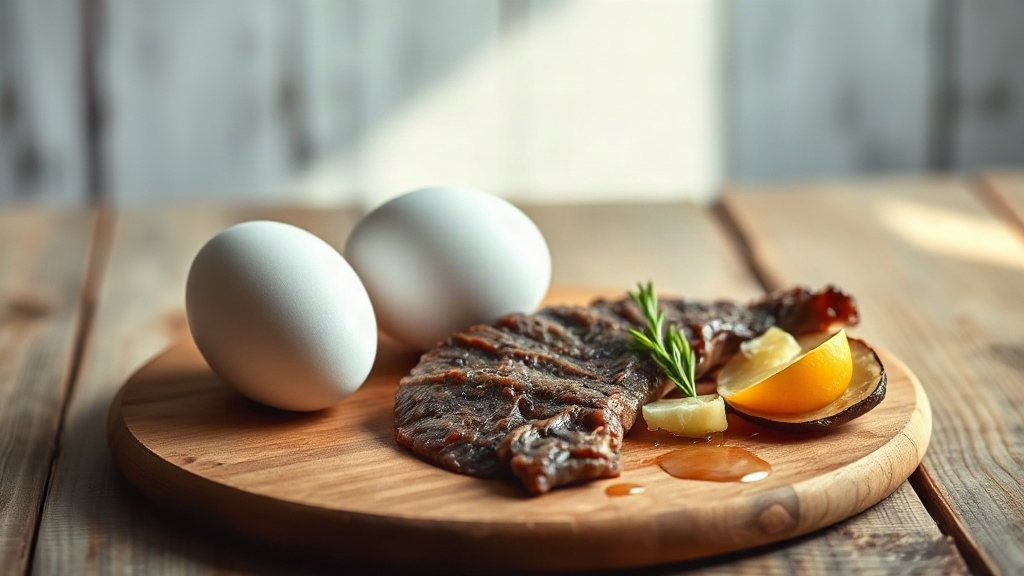
This nutrient is neither a true B vitamin nor a simple lipid: the US Institute of Medicine classified it separately as early as 1998, because the liver cannot make enough of it on its own to meet the body’s needs. The liver produces a small fraction of it by methylating phosphatidylethanolamine, a reaction that uses methyl groups supplied by vitamin B12 and folate. The rest has to come from food: eggs, calf liver, fish, soy and certain legumes are the richest sources.
This dual origin, limited synthesis plus dietary intake, explains why a deficiency can develop quickly whenever the diet changes (a strict vegan diet, artificial nutrition) without the body being able to compensate on its own.
How it acts on the brain and the liver
In the brain, it is a direct precursor of acetylcholine, a neurotransmitter involved in memory, attention and muscle contraction. It is also a building block of phosphatidylcholine and sphingomyelin, two phospholipids that make up neuron membranes.
In the liver, the same phosphatidylcholine plays a different role: it allows the assembly of VLDL, the particles that export triglycerides out of liver cells. Without enough intake, fat accumulates in place instead of circulating to the rest of the body.
- Precursor of acetylcholine: memory, attention, motor control
- Component of phosphatidylcholine and sphingomyelin: structure of cell membranes
- Methyl donor via betaine, a compound involved in DNA methylation
- Key part of VLDL assembly for fat export from the liver
What the science says
A controlled deficiency study showed that parenteral nutrition without it causes fatty liver disease that reverses after six weeks of intravenous supplementation, in patients on long term artificial nutrition (Buchman et al., 1995). In the Framingham Offspring cohort, covering 1,391 participants, a higher dietary intake is linked to better verbal and visual memory performance and to a smaller volume of white matter hyperintensities on MRI (Poly et al., 2011), an association, not proof of causation.
In pregnancy, a randomized trial compared 480 mg and 930 mg a day in the third trimester: children in the higher dose group showed better sustained attention at age 7, in a follow up sample reduced to 20 children (Bahnfleth et al., 2022), a result that needs confirming in larger cohorts before any firm recommendation.
This nutrient also has a documented downside. Gut bacteria convert part of dietary choline into trimethylamine, which the liver turns into TMAO. A high TMAO concentration is linked to a 2.5 fold higher risk of major cardiovascular events between the highest and lowest quartile, in a cohort of more than 4,000 patients (Tang et al., 2013). This mechanism does not undermine the value of a normal dietary intake; it simply argues against exceeding official guidelines without medical advice.
Choline in practice: who’s at risk and where to find it
Pregnant women, strict vegans and people who eat few eggs are the groups most exposed to insufficient intake. An analysis of NHANES data puts average US intake at 250 to 280 mg a day in women and 387 to 407 mg a day in men, below official guidelines for most adults (Wallace and Fulgoni, 2016).
In France, national nutrition guidelines set the reference intake at 400 mg a day for adults, compared with 480 mg during pregnancy and 520 mg during breastfeeding. In the United States, the Institute of Medicine recommends 550 mg for men and 425 mg for women, according to the National Institutes of Health.
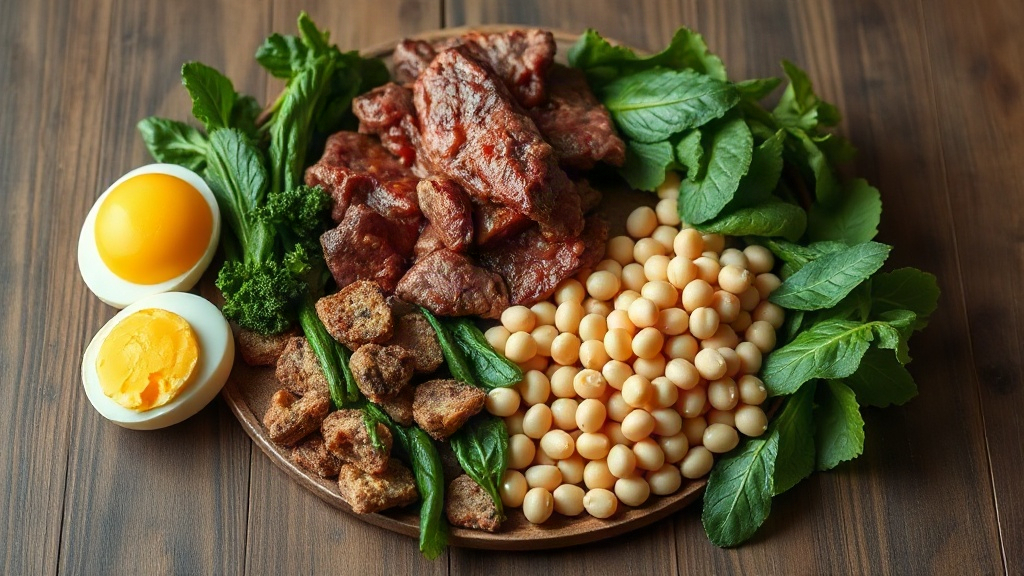
The table below situates the main food sources by typical serving.
| Food | Serving | Amount (mg, approx.) |
|---|---|---|
| Cooked calf liver | 100 g | 333 mg |
| Whole egg | 1 egg (50 g) | 147 mg |
| Cooked cod | 100 g | 84 mg |
| Chicken breast, cooked | 100 g | 72 mg |
| Cooked soybeans (edamame) | 100 g | 64 mg |
Choline shares its methylation pathway with vitamin B12 and folate: a combined deficiency worsens the functional shortfall of each nutrient. This link between methylated nutrients and age related epigenetic alterations makes it a topic longevity research keeps an eye on. On the cognitive side, its relevance connects to avenues explored in the prevention of Alzheimer’s disease, though its protective role on its own has not been demonstrated in a large randomized trial.
How to meet your daily needs
Three whole eggs or 100 g of calf liver are enough on their own to cover the recommended daily intake. A strict vegan diet, without liver or eggs, requires particular attention to soy, cruciferous vegetables and, if needed, a supplement taken under medical supervision.
- Choose whole eggs rather than egg whites alone: it is concentrated in the yolk
- Pair it with foods rich in vitamin B12 and folate to support the same methylation pathway
- Do not exceed 3.5 g a day, the upper limit set by the Institute of Medicine, beyond which a fishy body odor and a drop in blood pressure can appear
- Factor in the gut microbiome, whose composition influences how much of it gets converted into TMAO
In case of liver disease, pregnancy or ongoing treatment, medical advice remains necessary before any targeted supplementation.
Frequently asked questions
What exactly is choline?
Choline is an essential nutrient related to the B vitamins. It serves as a precursor for acetylcholine, a neurotransmitter, and for phosphatidylcholine, a phospholipid that structures cell membranes and lets the liver export fat. The body makes a small amount on its own, not enough to cover daily needs without dietary intake.
Is choline really an essential nutrient?
Yes: the US Institute of Medicine classified it as an essential nutrient in 1998, because natural liver synthesis is not enough to meet the body’s needs. A prolonged deficiency, documented in patients on artificial nutrition, leads to fat accumulating in the liver within just a few weeks.
What are the best food sources of choline?
Calf liver and whole eggs rank highest, with about 333 mg and 147 mg per typical serving respectively. Fish, chicken and certain legumes such as soy come next. Strict vegans need to pay particular attention to their intake.
Is choline bad for the heart?
At normal dietary doses, no. But gut bacteria convert part of dietary choline into TMAO, a molecule linked to higher cardiovascular risk in several cohorts. This mechanism is a reason to stick to official nutrition guidelines rather than supplementing without medical advice.
Can you supplement without medical advice?
A varied diet generally covers needs without a supplement. Targeted supplementation is mainly discussed in cases of pregnancy, a strict vegan diet or liver disease, and should stay supervised by a health professional given the debate over TMAO and the risk of exceeding the upper limit of 3.5 g a day.
Medical disclaimer. The information provided here is for informational purposes only and does not constitute medical advice. It does not replace a consultation. Ask a healthcare professional before changing your diet, taking dietary supplements or starting a new practice, especially if you have a medical condition, are pregnant or are under treatment. Dietary supplements do not replace a balanced diet or medical follow-up.