Loneliness and social isolation affect one in six people worldwide, according to the World Health Organization, and weigh directly on life expectancy. Since 2010, several meta-analyses covering hundreds of thousands of participants have linked this feeling to a 26 to 32% rise in the risk of premature death, an effect of the same order as other well established risk factors. This article details the biological mechanisms involved and the concrete steps that help rebuild social ties.
In brief – Loneliness is a subjective emotional state triggered by a lack of satisfying social connection, distinct from objective social isolation but just as harmful to health. Three meta-analyses covering more than 300,000 people link loneliness and social isolation, along with living alone, to a 26 to 32% rise in all cause mortality risk. The mechanism runs through the stress axis, low grade chronic inflammation and an altered immune response, with more pro-inflammatory genes switched on. The WHO estimates that loneliness contributes to roughly 871,000 deaths a year worldwide. Maintaining quality relationships, even just a few, lowers this risk.
Loneliness and Social Isolation: What They Actually Mean
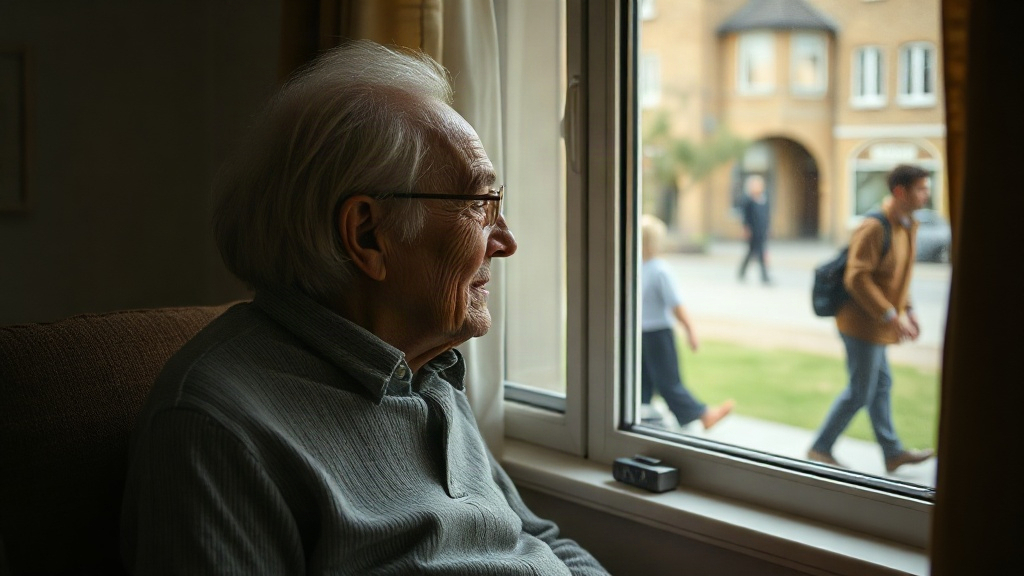
The word describes a subjective sense of missing social connection, regardless of how many people are actually nearby. It differs from social isolation, which describes an objective situation: few contacts, a narrow network, limited social participation. A person can live surrounded by others and still feel deeply alone; another can live in isolation without suffering from it. Public health researchers nonetheless treat both as comparable cardiovascular and metabolic risk factors, because they activate similar biological pathways.
The Biology Behind Loneliness: How It Affects the Body
It activates the hypothalamic pituitary adrenal axis in a sustained way, with a lasting rise in cortisol. This activation feeds a cascade of disruptions that touch several systems at once.
- Low grade inflammation: people who are chronically alone show higher inflammatory markers (CRP, IL-6), a backdrop that favors inflammaging.
- Unbalanced immune response: the leukocyte transcriptome shows more pro-inflammatory genes switched on and fewer antiviral genes, a pattern called the conserved transcriptional response to adversity.
- Cardiovascular strain: higher blood pressure and reduced heart rate variability have been reported in people who stay lonely over long periods.
- Fragmented sleep: the sense of insecurity that comes with it disrupts sleep continuity, with more nighttime awakenings.
What the Science Says About Loneliness and Social Isolation
The reference meta-analysis, led by Holt-Lunstad and colleagues in 2010 across 148 studies and more than 308,000 participants, links weak social relationships to a 50% lower probability of survival over the follow-up period, a magnitude compared to smoking as a statistical benchmark, not as a direct clinical equivalence (Holt-Lunstad et al., 2010). A second meta-analysis from the same team, published in 2015 across 70 studies, distinguishes three forms of loneliness: objective social isolation (+29% mortality risk), perceived loneliness (+26%) and living alone (+32%) (Holt-Lunstad et al., 2015). These associations stay significant after adjusting for age, sex and baseline health status.
In the United Kingdom, the English Longitudinal Study of Ageing, followed by Steptoe and colleagues among more than 6,500 people over 52, confirms an independent link between objective social isolation, perceived loneliness and mortality at seven years, even though the two forms overlap only partly (Steptoe et al., 2013). At the molecular level, Cole and colleagues identified a gene expression signature specific to perceived loneliness in circulating leukocytes, with more inflammation related genes and fewer antiviral genes (Cole et al., 2015). The World Health Organization estimates that about one in six people worldwide live with a persistent feeling of loneliness, and attributes close to 871,000 deaths a year to it (WHO, Commission on Social Connection). These figures describe robust statistical associations, not a cause and effect relationship strictly proven at the individual level.
Who Is at Risk, and How to Assess It
Loneliness particularly touches two opposite profiles: teenagers and young adults, among whom it is most common according to the WHO, and people over 75, about a quarter of whom live in isolation according to French public health data. The risk is therefore not confined to old age. The mechanisms involved (low grade inflammation, immune dysregulation) overlap with those detailed in our article on chronic inflammation and inflammaging, and the prolonged activation of the stress axis connects to the levers discussed for chronic stress. The table below summarizes the scale of these risks across major cohort studies.
| Factor | Increase in mortality risk | Source |
|---|---|---|
| Objective social isolation | +29% | Holt-Lunstad et al., 2015 |
| Perceived loneliness | +26% | Holt-Lunstad et al., 2015 |
| Living alone | +32% | Holt-Lunstad et al., 2015 |
| Weak social relationships (composite index) | 50% lower probability of survival over the follow-up period | Holt-Lunstad et al., 2010 |
For more on daily strategies to strengthen social ties, our article mental well being: 7 proven strategies covers complementary approaches, and our pillar page altered intercellular communication gathers all our articles on this aging mechanism.
A Practical Protocol: Concrete Levers
The most effective interventions target the quality of exchanges rather than their number. Here are steps consistent with the available data.
- Maintain at least one quality social connection each week (a call, a visit, a shared activity) rather than multiplying superficial contacts.
- Join a regular group activity (team sport, workshop, association) that creates a recurring setting for meeting people.
- Get involved in volunteering, linked in several observational studies to a lower sense of isolation among retirees.
- Limit time spent passively scrolling social media, which does not replace face to face exchange.
- See a mental health professional if chronic loneliness has settled in, especially if depressive symptoms appear.
Frequently Asked Questions
What is the difference between loneliness and social isolation?
Loneliness is a subjective feeling: the sense of lacking satisfying social connections. Social isolation is an objective situation, measurable by the number of contacts and the frequency of interactions. The two are related but can exist independently: a person can feel lonely while surrounded by others, or live in isolation without suffering from it.
Does loneliness really increase the risk of death?
Several meta-analyses covering hundreds of thousands of participants link loneliness and social isolation, as well as living alone, to a 26 to 32% rise in all cause mortality risk. These results rest on observational data: they show a robust association, not proof of direct causation for every individual.
Does loneliness mainly affect older adults?
No. According to the World Health Organization, loneliness is now more common among teenagers and young adults than among older people, even though objective social isolation increases after age 75. The two populations need different responses.
How can I tell if I am experiencing chronic loneliness?
Signs include a persistent sense of disconnection despite the presence of others, growing avoidance of interactions, sleep disturbances and unexplained fatigue. When this feeling lasts several months and comes with depressive symptoms, seeing a mental health professional is recommended.
Does remote work increase the risk of loneliness?
Remote work reduces the informal interactions of daily working life, which can encourage this feeling in people who already have little social contact outside of work. The effect mostly depends on a person’s overall social network, not on the workplace alone.
Medical disclaimer. The information provided here is for informational purposes only and does not constitute medical advice. It does not replace a consultation. Ask a healthcare professional before changing your diet, taking dietary supplements or starting a new practice, especially if you have a medical condition, are pregnant or are under treatment. Dietary supplements do not replace a balanced diet or medical follow-up.