Hearing loss does more than dull the sounds of daily life: it changes how the brain itself works. A US cohort followed nearly 640 people for twelve years and measured how much this untreated decline multiplies dementia risk, depending on its severity. This article explains the mechanism, cites the figures, and details the steps that limit its impact on the brain, from the first signs, often after age 60.
In brief – Hearing loss is the gradual decline of the sense that captures and transmits sound to the brain, known clinically as presbycusis when age-related, and it weighs directly on cognitive function. Weakened hearing forces the brain to spend extra resources compensating for poorly perceived sounds, reduces sensory stimulation, and encourages social withdrawal that worsens dementia risk, by as much as 4.94 times in cases of severe loss (Lin et al., 2011). The ACHIEVE trial, published in The Lancet in 2023, found that early use of hearing aids slowed cognitive decline by 48% among the people at highest risk. A regular hearing test after age 60 remains the simplest prevention step, and the most often overlooked.
What Is Hearing Loss and How Does It Progress With Age?
Hearing turns sound vibrations captured by the outer ear into an electrical signal carried to the brain by the auditory nerve. This pathway runs through the cochlea, where microscopic hair cells convert sound into nerve impulses. These cells do not regenerate: their gradual wear, driven by noise and age, explains most hearing decline after age 60.
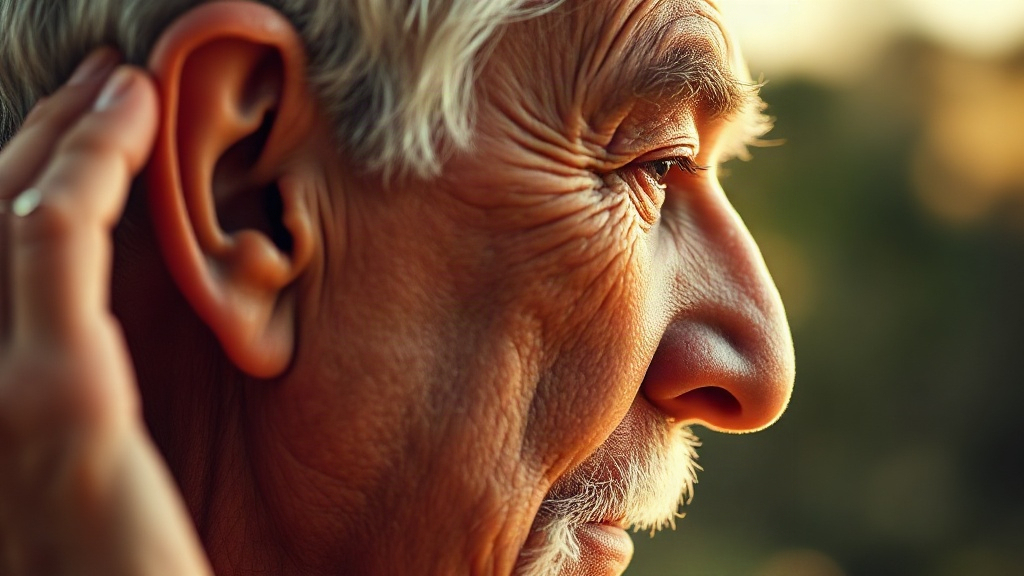
Presbycusis is this bilateral, age-related hearing loss, which first affects high frequencies before gradually spreading. According to the National Institute on Aging, it affects more than 65% of people older than 65, compared with 18% of those aged 35 to 44. It sets in so slowly that family and friends often notice it before the person affected does.
How Does This Affect the Brain?
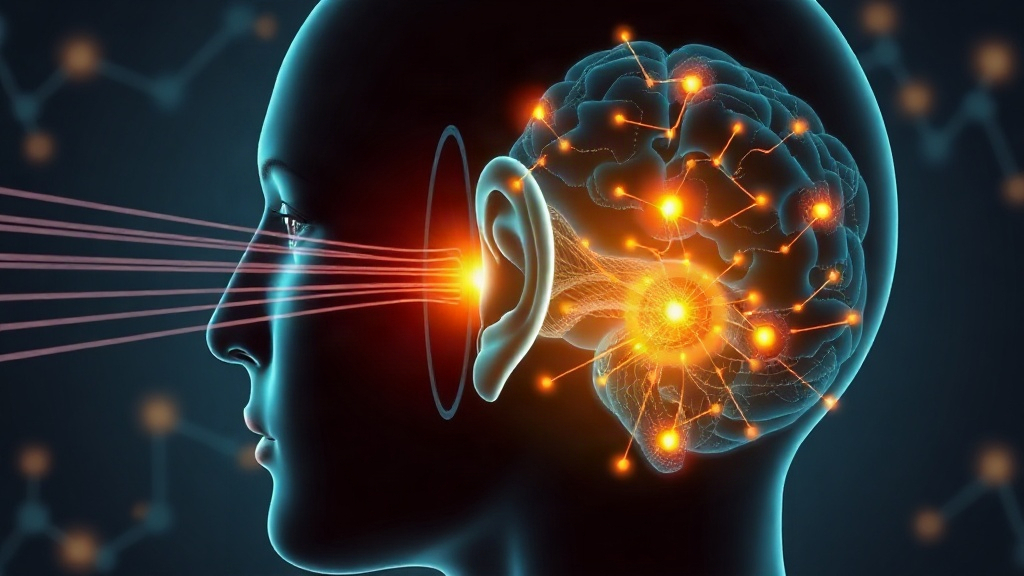
Several complementary hypotheses explain the link between hearing and cognition, without a single mechanism dominating at this stage. Researchers point to increased cognitive load, regional brain atrophy, and gradual social withdrawal.
- Increased cognitive load: the brain diverts resources toward decoding degraded sound, at the expense of working memory and attention.
- Regional atrophy: brain areas linked to auditory processing and language shrink faster when the loss is not compensated for.
- Sensory impoverishment: reduced sound stimulation lowers overall activity in the brain networks involved in cognition.
- Social isolation: listening fatigue pushes people to avoid conversations and groups, a dementia risk factor identified independently of hearing.
What the Science Shows About Hearing Loss and Dementia Risk
The Baltimore cohort (Lin et al., 2011) followed 639 people without dementia for a median of 11.9 years. Dementia risk rose in a log linear fashion with the severity of baseline hearing impairment, measured by audiometry.
| Severity | Hearing threshold | Dementia risk vs. normal hearing |
|---|---|---|
| Normal | Below 25 dB | Reference |
| Mild | 25 to 40 dB | Risk multiplied by 1.89 |
| Moderate | 41 to 70 dB | Risk multiplied by 3.00 |
| Severe | Above 70 dB | Risk multiplied by 4.94 |
The Lancet Commission on dementia prevention (Livingston et al., 2020) ranks hearing loss as the top modifiable dementia risk factor identified to date, with a population attributable fraction estimated at 8%, the highest of the twelve factors it lists. In France, the PAQUID cohort (Amieva et al., 2018) followed 3670 people for 25 years: self-reported hearing difficulty was linked to faster cognitive decline, an effect that was reduced among hearing aid users.
The ACHIEVE trial (Lin et al., 2023) remains the first randomized evidence of a causal link. Across 977 adults aged 70 to 84 followed for three years, the hearing intervention did not change cognitive decline for the group as a whole, but reduced it by 48% in the prespecified subgroup at high cardiovascular risk. This mixed result is a reminder that a strong epidemiological association does not, by itself, prove a universal benefit from hearing aids.
In Practice: When to Worry and Who to See
A hearing assessment with an ear, nose and throat (ENT) specialist remains the only reliable way to evaluate a loss; an online test can only serve as an initial screen. The table below lists the most common signs and the action to prioritize.
| Everyday sign | Possible interpretation | Recommended action |
|---|---|---|
| Frequently asking people to repeat themselves | Loss in high frequencies, early presbycusis | Audiometric assessment with an ENT specialist |
| Turning the TV volume up more than usual | Gradual drop in hearing threshold | Hearing test, avoid self-diagnosis |
| Avoiding group meals or noisy places | Listening fatigue and early social withdrawal | ENT consultation and an audiologist |
| Muffled ears after a concert or construction work | Acute noise trauma | Auditory rest, seek medical advice if symptoms persist beyond 48 hours |
Preventing hearing related cognitive decline connects to levers already documented in our piece on the link between social isolation and longevity and in the proven prevention levers against Alzheimer’s. Intercellular communication, one of the biological mechanisms of aging, helps explain why a weakened sense affects entire brain networks rather than a single isolated area.
Protocol: Steps That Protect Hearing and Cognition
No protocol restores hearing that is already damaged, but several simple steps slow its progression and limit its impact on the brain.
- Get a hearing test every year after age 60, or earlier in case of occupational noise exposure.
- Wear hearing protection at concerts, construction sites, or other repeated noisy activities.
- See a specialist at the first signs, rather than waiting until social discomfort has set in.
- Consider hearing aids if a loss is confirmed: the ACHIEVE trial shows a measurable cognitive benefit for people at the highest risk.
- Keep up social interactions and cognitively stimulating activities, which protect memory independently, as noted in our article on ginkgo biloba and memory.
Frequently Asked Questions About Hearing Loss and the Brain
Why does hearing loss increase dementia risk?
Degraded hearing forces the brain to spend resources compensating for poorly perceived sounds, at the expense of memory and attention. This load adds to impoverished sensory stimulation and gradual social isolation. Together, these mechanisms speed up cognitive decline, according to the Baltimore cohort (Lin et al., 2011).
Does wearing a hearing aid really protect the brain?
The ACHIEVE trial, published in The Lancet in 2023, followed 977 adults aged 70 to 84 for three years. Among participants at the highest cardiovascular risk, the hearing intervention reduced memory and reasoning loss by 48% compared with a control group. The effect was not significant across the full study population.
At what age should you start monitoring your hearing?
Presbycusis affects more than 65% of people older than 65, according to the National Institute on Aging. An initial hearing assessment from age 50 to 60 can catch an early loss in high frequencies, often unnoticed in daily life. An annual check becomes worthwhile after age 60, or earlier with noise exposure or a family history of hearing problems.
What is the difference between presbycusis and sudden hearing loss?
Presbycusis is a progressive, age-related decline that is bilateral and initially limited to high pitched sounds. Sudden hearing loss appears within hours or days, often in one ear only, and is an ENT emergency that should be treated within the first 24 to 48 hours to preserve the chances of recovery.
Is this cognitive decline reversible?
Current data do not show full reversibility. They mainly suggest that early management of the condition can slow cognitive decline. No study shows that hearing aids restore cognition that has already been affected: the priority remains prevention before advanced impairment sets in.
Medical disclaimer. The information provided here is for informational purposes only and does not constitute medical advice. It does not replace a consultation. Ask a healthcare professional before changing your diet, taking dietary supplements or starting a new practice, especially if you have a medical condition, are pregnant or are under treatment. Dietary supplements do not replace a balanced diet or medical follow-up.