Soy and female hormones keep coming up in questions about menopause, breast cancer risk and thyroid function. Since the 1990s, its isoflavones have been accused of disrupting women’s hormones just as often as they have been praised for easing symptoms. What do the studies on diet, supplements and women’s bodies actually show?
In brief – Soy and female hormones interact through isoflavones, plant compounds that bind to estrogen receptors without fully reproducing their action. A 2025 meta-analysis (533 participants) found a moderate reduction in menopause symptoms with these isoflavones. On breast cancer, a meta-analysis covering 648,913 women found no significant association with isoflavone intake. On the thyroid, soy can slightly shift TSH without changing free T3 or T4 in healthy people. Food safety authorities still advise limiting foods very rich in isoflavones for children and pregnant women.
Definition: what are soy isoflavones
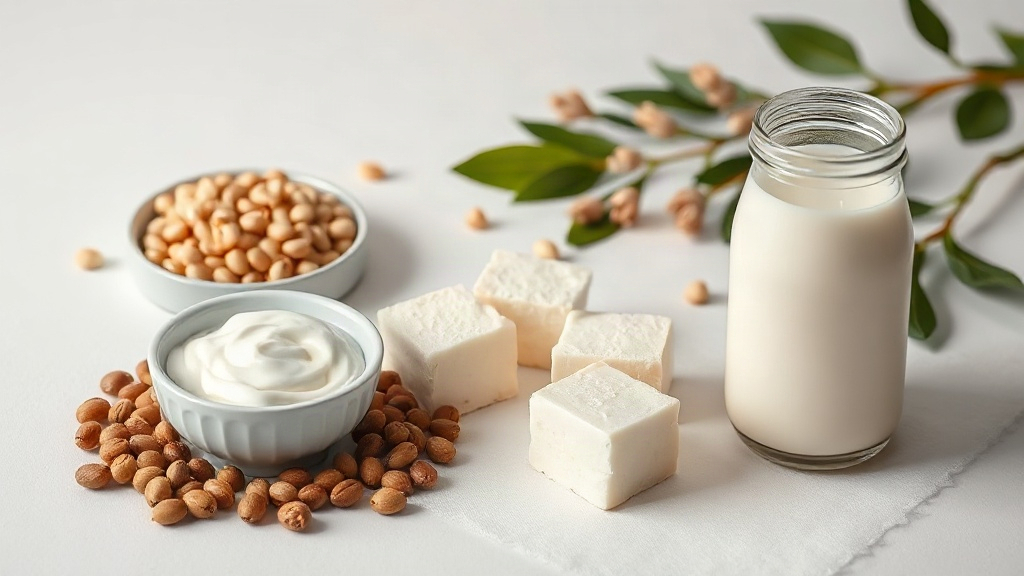
Isoflavones are a family of flavonoids found in high concentration in the soybean and its derivatives (tofu, tempeh, miso, and soy drinks and desserts). The three main ones are genistein, daidzein and glycitein. Their molecular structure resembles estradiol, the reference human estrogen, which is why they are called phytoestrogens.
That resemblance is only partial: isoflavones bind preferentially to the ERbeta receptor rather than ERalpha, the receptor that carries most of the proliferative effects of estrogen on breast tissue and the endometrium. Their biological activity is also 100 to 1,000 times weaker than estradiol’s. This mode of action links soy to the intercellular communication pillar, one of the mechanisms of aging in which hormonal signals play a central role.
Mechanism: how soy and female hormones interact
Once ingested, isoflavones are transformed by the gut microbiome. In some women, daidzein is converted into equol, a metabolite more active on hormone receptors. Only 30 to 50% of Western adults produce equol in meaningful amounts, compared with a majority of East Asian populations used to regular soy consumption from childhood. This difference explains part of the gap between Western and Asian study results.
- Competitive binding to ERbeta receptors, with a weak estrogenic effect that varies between individuals.
- Conversion into equol depends on the gut microbiome and is not universal.
- A so-called “selective” effect: mildly estrogenic in a low-estrogen context (menopause), potentially anti-estrogenic when endogenous estrogen levels are high.
- A possible but minor interaction with thyroid hormone synthesis in people with low iodine intake.
What the science says
On menopause symptoms, a meta-analysis by Luan et al., published in 2025 in PeerJ, pooled the available randomized trials: across 533 participants in seven studies, these isoflavones moderately reduced overall menopause symptom severity (Hedges’ g = -0.25) and reduced associated depressive symptoms even more (Luan et al. 2025, PeerJ, PMID 40718787).
On breast cancer, the fear remains widespread but poorly calibrated. A meta-analysis by Zhao, Jin et al., published in 2018, pooled 16 prospective cohort studies, 648,913 participants and 11,169 breast cancer cases: the relative risk associated with high isoflavone intake compared with low intake was 0.99, meaning no significant association, protective or harmful, in the mostly Western populations studied (Zhao, Jin et al. 2018, PMID 29277346). Earlier meta-analyses of Asian cohorts reported a more protective effect, which points to a role for dose and early-life exposure rather than a generic danger from the legume.
On the thyroid, a meta-analysis by Otun et al., published in 2019 in Scientific Reports, combined 18 randomized trials measuring TSH, free T3 and free T4: soy and its isoflavones caused a slight shift in TSH without significantly changing free T3 or T4, suggesting an effect with no clinical translation in healthy people with adequate iodine status (Otun et al. 2019, PMID 30850697). Caution is still warranted for people with existing hypothyroidism or iodine deficiency: see our article on the link between iodine and the thyroid.
European food safety authorities have reviewed the evidence on phytoestrogens and advise limiting isoflavone-rich products in children and in pregnant or breastfeeding women, as a precaution for reproductive development, without questioning moderate intake in adults (EFSA, food safety topics). The Harvard T.H. Chan School of Public Health reaches a similar conclusion for the general adult population, describing soy’s overall effect on health as neutral to beneficial (Harvard T.H. Chan School of Public Health, Nutrition Source).
In practice: soy and female hormones in daily life
Soy intake is mainly worthwhile in two situations: a regular Asian-inspired or plant-based diet, and support for hot flashes during menopause. The amount and regularity matter more than the form: a moderate, continuous daily intake, as seen in Asian cohorts, is quite different from an occasional, concentrated dose taken as a supplement.
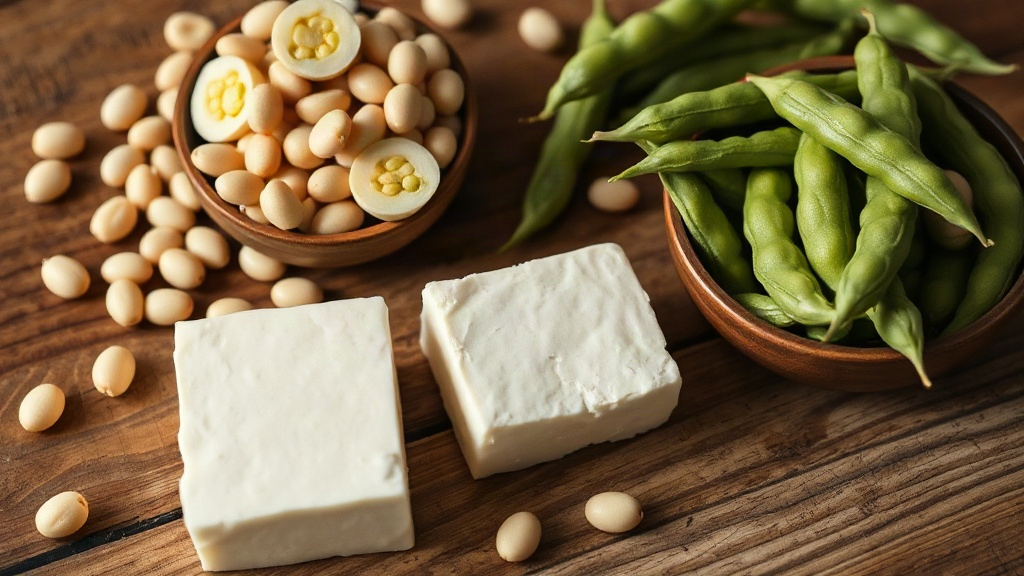
The table below compares the main food sources and their approximate isoflavone content, to put everyday uses in perspective.
| Food or form | Typical serving | Isoflavones (mg) |
|---|---|---|
| Soy drink | 250 ml (about 1 cup) | 6 to 25 |
| Plain tofu | 100 g (3.5 oz) | 20 to 35 |
| Tempeh | 100 g (3.5 oz) | 30 to 50 |
| Edamame (green soybeans) | 100 g (3.5 oz) | 15 to 20 |
| Concentrated supplement | 1 dose | 40 to 100 |
This contrast explains why a soy-rich diet and a concentrated supplement are not comparable: the surrounding food matrix (fiber, protein, other compounds in the whole bean) shapes the absorption and effect of isoflavones, a mechanism absent from an isolated supplement. To place this topic within a broader view of age-related inflammation, our article on chronic inflammation and its drivers covers other cell-communication mechanisms.
Protocol: fitting soy in without overdoing it
No single protocol has consensus support, but several guardrails emerge from the available studies and official recommendations.
- Favor whole or minimally processed soy (tofu, tempeh, edamame) over concentrated isoflavone extracts, unless a doctor advises otherwise.
- Spread intake across the week rather than concentrating it in a single high-dose serving each day.
- Ask a doctor before starting isoflavone supplements if there is a history of hormone-sensitive cancer (breast, endometrial or ovarian).
- Monitor thyroid function in cases of known hypothyroidism, rather than avoiding soy outright.
- Avoid highly concentrated isoflavone preparations in children and during pregnancy, in line with food safety recommendations.
Frequently asked questions
Does soy lower or raise estrogen?
Neither, in a clear-cut way. Isoflavones bind weakly to estrogen receptors and act as modulators rather than strong hormones. When endogenous estrogen is low, as in menopause, soy and female hormones interact in a way that partly offsets the drop for certain symptoms. Soy does not trigger a hormonal rise comparable to estrogen therapy.
Does soy increase breast cancer risk?
The available prospective data, covering several hundred thousand women, show no significant association between isoflavone intake and breast cancer risk in Western populations. Some Asian cohorts even report a protective effect, though that result cannot be generalized as it stands.
Can soy be eaten with a thyroid condition?
In someone with adequate iodine status, randomized trials show no significant change in free T3 or T4 with this legume. A slight effect on TSH has been observed. Caution is still advised for people with diagnosed hypothyroidism or iodine deficiency, with appropriate medical follow-up.
How much soy can be eaten per week safely?
There is no single validated threshold for all populations. European and French food safety authorities recommend moderate intake for adults and extra caution for children and pregnant or breastfeeding women, favoring whole food sources over heavily concentrated isoflavone products.
Medical disclaimer. The information provided here is for informational purposes only and does not constitute medical advice. It does not replace a consultation. Ask a healthcare professional before changing your diet, taking dietary supplements or starting a new practice, especially if you have a medical condition, are pregnant or are under treatment. Dietary supplements do not replace a balanced diet or medical follow-up.