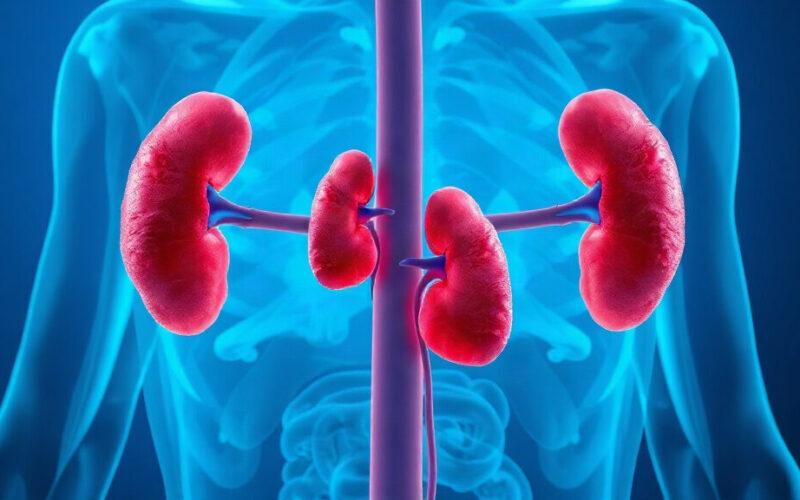
Pesticide residues are measurable in the human body, as confirmed by biomonitoring surveys conducted in France since the mid-2000s. Pesticides are used in agriculture to protect crops from insects, fungi and weeds, but these chemical substances do not stop at the surface of food: part of them penetrates cells and disrupts their function, from mitochondrial oxidative stress to hormonal interference. Understanding this mechanism helps put the real risk into perspective, without giving in to panic or denial.
In brief – Pesticide residues are traces of insecticides, herbicides and fungicides used to protect crops, and they are found in food, water and the human body long after treatment. At the cellular level, pesticides mainly act through oxidative stress, mitochondrial dysfunction and disruption of hormone receptors, according to a 2026 mechanistic review published in the International Journal of Molecular Sciences. French national biomonitoring detects organochlorine pesticide residues in close to half of the population despite their ban decades ago, and glyphosate in fewer than 20% of people tested. Controlled trials show that a fully organic diet strongly reduces urinary excretion of residues within days to weeks, without eliminating it entirely. The real risk depends mainly on the cumulative dose, the substance involved and the timing of exposure, with pregnancy and early childhood being the most sensitive windows.
Definition: what is a pesticide residue?
A pesticide is any chemical substance designed to destroy or repel an organism considered harmful to crops: an insect, fungus, weed or rodent. The term covers three main categories of use: insecticides, fungicides and herbicides, along with more specific compounds such as rodenticides. In the European Union, market approval is regulated by national food safety agencies (in France, Anses) and by EU Regulation (EC) No 396/2005, which sets maximum residue limits allowed in food.
A pesticide residue is what remains of the active substance, or its breakdown products, once treatment has been carried out: on the skin of a fruit, in the flesh, in tap water or in household dust. The presence of a residue does not automatically mean a safety threshold has been exceeded, but it reflects chronic low-dose exposure, which differs from acute poisoning.
Mechanism: how pesticides act on cells
A mechanistic review published in 2026 in the International Journal of Molecular Sciences (Zidan et al., PMID 42589584) maps out the main pathways through which pesticides disrupt a human cell, far beyond their original agricultural target. These pathways often overlap within a single molecule.
- Oxidative stress: several families of pesticides generate an excess of free radicals that overwhelms the cell’s antioxidant capacity, damaging lipids, proteins and DNA.
- Mitochondrial dysfunction: organophosphates and organochlorines, both lipophilic, accumulate in the mitochondrial membrane and disrupt the respiratory chain, reducing cellular energy production.
- Endocrine disruption: some molecules bind to hormone receptors (estrogen, androgen, thyroid) or alter hormone synthesis and transport, without sharing the original hormone’s structure.
- Neurotoxicity: organophosphates inhibit acetylcholinesterase, a key enzyme in nerve transmission, which explains their acute toxicity in people with heavy occupational exposure.
- Epigenetic reprogramming: early-life exposure can alter DNA methylation marks, a mechanism proposed to explain effects that persist after exposure stops.
| Family | Example substances | Dominant cellular mechanism | Main use |
|---|---|---|---|
| Organophosphates | Chlorpyrifos, malathion | Acetylcholinesterase inhibition, mitochondrial oxidative stress | Insecticide |
| Organochlorines | Lindane, DDT residues | Endocrine disruption, long-term tissue accumulation | Insecticide (historical use) |
| Neonicotinoids | Clothianidin, imidacloprid | Interference with nicotinic receptors, hepatic oxidative stress | Insecticide |
| Pyrethroids | Permethrin, cypermethrin | Alteration of neuronal sodium channels, oxidative stress | Insecticide |
| Glyphosate-based herbicides | Glyphosate | Disruption of gut microbiota, oxidative stress | Weedkiller |
What the science says about pesticide residues and health
A large-scale French scientific review process assessed the evidence on pesticides and health in two rounds, first in 2013 and then in an updated 2021 report covering more than 5300 scientific documents. Reviewers focused on four families of effects associated with pesticide exposure: cancers, neurological diseases, fertility disorders, and effects on fetal and child development, a scope in line with international assessments such as the World Health Organization’s review of pesticide residues in food.
A US cohort study followed prenatal and childhood exposure to chlorpyrifos, an organophosphate that is now restricted, and its association with neurodevelopment in three-year-old children (Guo et al. 2019, Environmental Pollution, PMID 31108286). The results show an association, not proof of causation on their own, but they contributed to later regulatory restrictions on this molecule.
On the neurodegenerative side, a case-control study nested within the US Agricultural Health Study reports a roughly 2.5-fold higher risk of Parkinson’s disease among farmworkers exposed to rotenone or paraquat, two pesticides now banned in Europe (Tanner et al. 2011, Environmental Health Perspectives, PMID 21269927), a link we detail in our article on Parkinson’s disease risk factors.
In France, the national ESTEBAN biomonitoring survey, which covered people aged 6 to 74, detects organochlorine pesticide residues in close to half of adults and children despite their ban decades ago, and glyphosate in fewer than 20% of those tested. Overall levels have fallen since the 2006-2007 ENNS study, except for one pyrethroid metabolite, which rose. Comparable population-level tracking of chemical exposure is carried out internationally, including through the National Institute of Environmental Health Sciences’ pesticide research programs.
In practice: reducing your exposure to pesticides
Food remains the main source of pesticide exposure for the general population, ahead of water and indoor air. Several controlled trials have measured the effect of switching to a fully organic diet on urinary residues, a direct marker of the body’s actual exposure.
| Study | Duration | Population | Measured result |
|---|---|---|---|
| Rempelos et al. 2022 | 2 weeks | Healthy adults, randomized crossover trial | 91% lower total urinary residue excretion vs. conventional diet |
| Hyland et al. 2019 | 6 days | Children and adults, California | 60.7% (chlorpyrifos) to 95% (malathion) lower, depending on the substance |
| Oates et al. 2014 | 7 days | Adults, New Zealand | Significant decrease in urinary organophosphate metabolites |
All three trials are indexed on PubMed: Rempelos et al. (PMID 34718382), Hyland et al. (PMID 30765100) and Oates et al. (PMID 24769399). None of these trials brought exposure down to zero: some residues persist, particularly those from organochlorine compounds stored in fatty tissue for years.
Rinsing with plain water removes some surface residues but has no effect on systemic residues, which are absorbed by the plant as it grows. This distinction explains why washing and peeling remain useful without offering complete protection. For comparable environmental exposure pathways, our articles on microplastics and on air pollution detail other routes of chronic low-dose contact. The altered intercellular communication pillar brings together these exposures that disrupt hormonal and inflammatory signaling.
Protocol: steps that actually limit pesticide exposure
No single step eliminates pesticide residues completely, but several measures combined reduce the total dose absorbed over time.
- Wash fruits and vegetables under running water while rubbing the skin, including produce that will be peeled.
- Peel thin-skinned produce when texture allows, keeping in mind that this also removes some fiber and micronutrients.
- Vary sources and varieties consumed, to avoid repeated exposure to the same active substance.
- Choose organic for the food categories most frequently treated according to national monitoring data, when budget allows.
- Check tap water quality regularly in agricultural areas, where herbicides such as glyphosate are detected more often.
For pregnant people and young children, these precautions carry more weight: this is the window in which the most consistent signal between exposure and developmental effects has been identified.
Frequently asked questions about pesticides
What is a pesticide residue?
A pesticide residue is the trace of an active substance, or one of its breakdown products, that remains after an agricultural treatment. It is found on the skin of fruits and vegetables, in their flesh, in water or in household dust. Its presence is regulated by maximum limits set under European food safety rules.
How do pesticides act on the body’s cells?
Depending on the molecule, pesticides trigger oxidative stress, disrupt the mitochondrial respiratory chain, bind to hormone receptors or inhibit an enzyme involved in nerve transmission. These mechanisms often overlap within a single substance and explain the range of effects studied across chemical families.
Does washing fruits and vegetables remove pesticides?
No. Washing with water removes some of the residues deposited on the surface but has no effect on systemic residues, which are absorbed by the plant as it grows and are present in the flesh. Washing and peeling remain useful steps, but they do not replace reducing exposure at the source.
Does eating organic really reduce pesticide exposure?
Yes, according to several controlled trials measuring urinary residues. A randomized crossover trial measured a 91% drop in total urinary residue excretion after two weeks on a fully organic diet, without exposure falling to zero for every substance.
Are pesticides linked to diseases like Parkinson’s?
An association has been observed in farmworkers exposed to rotenone and paraquat, with a roughly 2.5-fold higher risk of Parkinson’s disease in a US cohort. Both substances are now banned in Europe. The link mainly concerns prolonged occupational exposure, not everyday diet.
Medical disclaimer. The information provided here is for informational purposes only and does not constitute medical advice. It does not replace a consultation. Ask a healthcare professional before changing your diet, taking dietary supplements or starting a new practice, especially if you have a medical condition, are pregnant or are under treatment. Dietary supplements do not replace a balanced diet or medical follow-up.