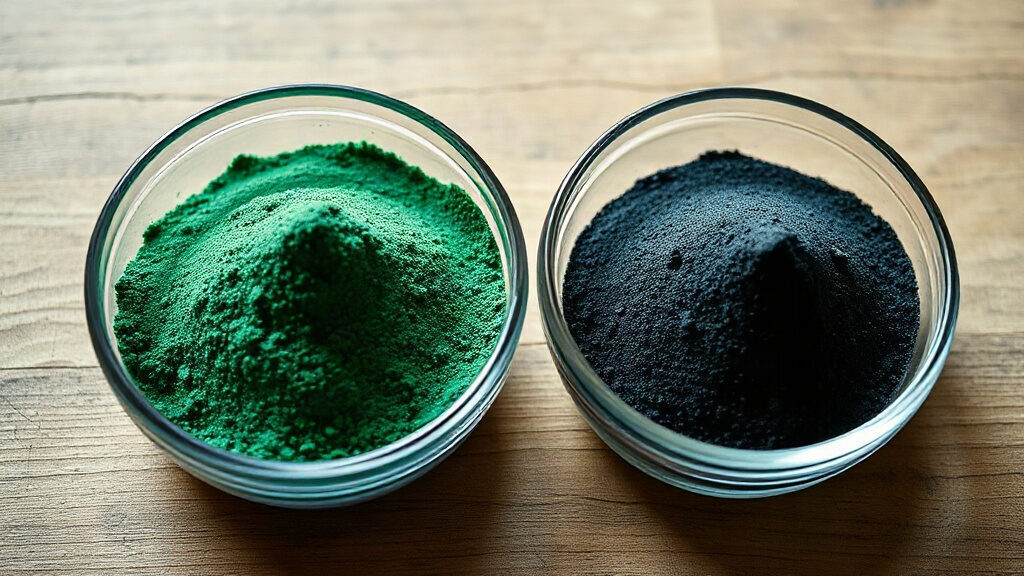
Spirulina has become, since the 2010s, the star micro-algae of the supplement aisle, often confused with its green cousin, chlorella. Both are marketed as superfoods for immunity and longevity, but their biological profiles and clinical evidence diverge sharply. What does randomized research say about cholesterol, blood pressure and blood sugar, and which one should you choose depending on your goal?
In brief – Spirulina is a blue-green cyanobacterium rich in phycocyanin and iron, and several meta-analyses of randomized trials link its daily intake (1 to 8 g) to lower LDL, triglycerides and diastolic blood pressure. Chlorella, a genetically distinct eukaryotic green algae, shows comparable effects on total cholesterol and fasting blood sugar in a meta-analysis of 19 trials, but a more recent 2025 review finds a neutral effect on its blood pressure and lipids, unlike spirulina, which keeps a significant effect on diastolic pressure. Its reputation as a heavy-metal “detox” is not backed by any solid human clinical trial. For longevity, the two micro-algae share a similar nutritional base, but spirulina is more convincing on the lipid profile and chlorella on blood sugar.
Spirulina and Chlorella: Two Organisms From Different Kingdoms
Spirulina (Arthrospira platensis) is not an algae in the strict botanical sense: it is a cyanobacterium, a nucleus-free prokaryotic microorganism that photosynthesizes like a plant. It grows in spiral filaments in warm alkaline water, which gives it its characteristic blue-green color, caused by a unique pigment called phycocyanin. Chlorella (most often Chlorella vulgaris or pyrenoidosa) is, by contrast, a true unicellular eukaryotic green algae, with a nucleus and a thick cellulose cell wall that must be mechanically broken down during production to remain digestible. This taxonomic gap explains much of the differences seen in clinical trials.
Composition: What Each Micro-Algae Actually Provides
Both organisms show a protein density rarely seen in the plant kingdom, but their dominant pigments and micronutrients differ sharply.
- Protein: roughly 60 to 70% of dry weight for this cyanobacterium, 50 to 60% for chlorella, with an amino acid profile close to that of animal protein for both organisms.
- Active pigments: phycocyanin, unique to spirulina, inhibits the NF-kB inflammatory pathway in laboratory studies; chlorella concentrates more chlorophyll, with no specific clinical effect demonstrated beyond its iron and magnesium content.
- Iron and beta-carotene: spirulina is a dense source of both, so much so that France’s food safety agency (ANSES) recommends not exceeding a few grams per day to stay under the recommended maximum intake of beta-carotene.
- Vitamin B12: neither is a reliable source for people on a vegan diet; ANSES notes that spirulina mostly contains an inactive B12 analog, and the B12 content of its green cousin varies widely depending on the strain and growing process.
What the Science Says About Cholesterol and Blood Pressure
Randomized trials converge on one point: both micro-algae modestly improve the cardiometabolic profile, with different magnitudes depending on the measure.
A meta-analysis of 7 controlled trials measured, under spirulina, an average drop in total cholesterol of 46.76 mg/dl, LDL of 41.32 mg/dl and triglycerides of 44.23 mg/dl, alongside a rise in HDL of 6.06 mg/dl (Serban et al., 2016). A 2023 GRADE review of 20 trials and 1,076 participants confirms this dose-dependent drop in LDL and triglycerides (Rahnama et al., 2023). On blood pressure, a meta-analysis of 5 trials and 230 participants found a drop of 4.59 mmHg in systolic and 7.02 mmHg in diastolic pressure, more pronounced in people who already had hypertension (Machowiec et al., 2021).
For chlorella, a meta-analysis of 19 trials and 797 participants reports a drop in total cholesterol of 9.09 mg/dl, LDL of 8.32 mg/dl, systolic pressure of 4.51 mmHg and fasting blood sugar of 4.23 mg/dl, with no significant effect on triglycerides or HDL (Fallah et al., 2018). A more recent review, published in 2025, nuances this finding: it finds a neutral effect of chlorella on blood pressure and lipids, while spirulina keeps a significant effect on diastolic pressure (Pinto-Leite et al., 2025). This gap reflects the heterogeneity of the available trials, doses and strains combined, more than a definitive consensus.
In Practice: Which One Should You Choose Based on Your Goal
The choice mainly depends on the cardiometabolic target and digestive tolerance, rather than a general superiority of one organism over the other.
| Criterion | Spirulina | Chlorella |
|---|---|---|
| Biological nature | Cyanobacterium | Eukaryotic green algae |
| Protein (dry weight) | 60-70% | 50-60% |
| Signature pigment | Phycocyanin (blue) | Chlorophyll (green) |
| Best-documented effect | LDL, triglycerides, diastolic pressure | Total cholesterol, fasting blood sugar |
| Cell wall | Thin, digestible without processing | Cellulose-based, must be broken down |
| Heavy-metal “detox” claim | Not clinically studied | Not confirmed in humans |
For a lipid-focused goal, elevated LDL or triglycerides, randomized data lean in favor of spirulina and its phycocyanin, whose antioxidant mechanism is detailed in our dedicated feature. For mildly elevated fasting blood sugar, chlorella has more specific data, to be used within a broader approach to cardiometabolic risk management. Neither replaces the core levers of the deregulated nutrient sensing pillar: regular physical activity, fiber and overall diet quality.
Protocol: Dose, Precautions and Product Quality
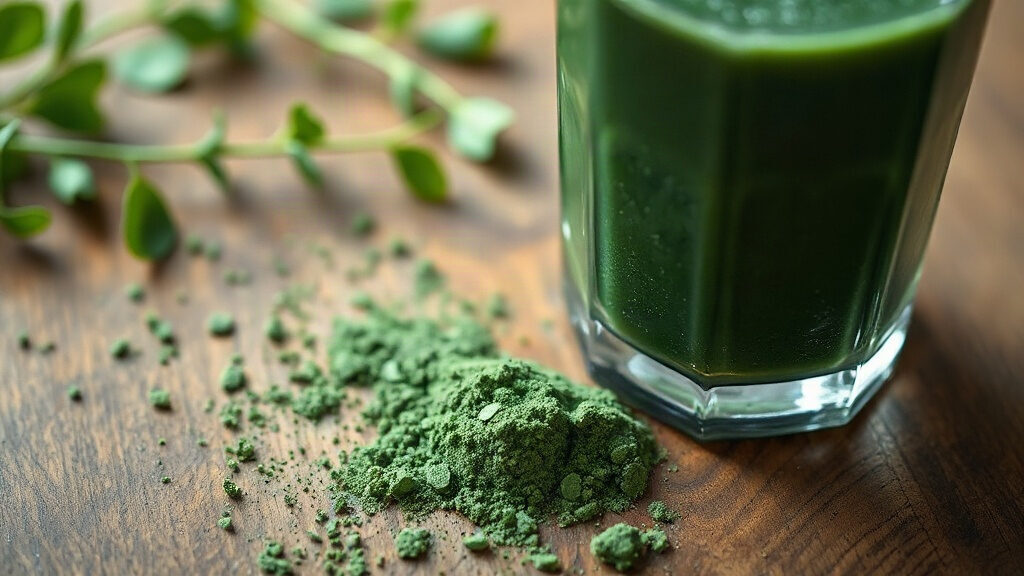
Positive clinical trials use doses of 1 to 8 g per day of spirulina, or 2 to 10 g of chlorella, most often over 4 to 12 weeks, in tablet form or diluted powder.
- Start with half the dose for one week: both micro-algae can cause digestive issues (bloating, loose stools) when you begin.
- Choose a product from a traceable supply chain: ANSES warns of a contamination risk from cyanotoxins (microcystins), bacteria or heavy metals (lead, mercury, arsenic) depending on growing conditions.
- Avoid in case of phenylketonuria or a known allergic predisposition, two contraindications explicitly listed by ANSES.
- Don’t count on these algae for a “detox” effect: as our feature on detox points out, no controlled clinical trial in humans has shown that chlorella removes mercury or lead from the body; the available data remain limited to laboratory and animal studies.
The NCCIH’s overview of using dietary supplements wisely details these quality and contamination risks, and what to check before buying any algae-based supplement.
Frequently Asked Questions
What Is the Difference Between Spirulina and Chlorella?
Spirulina is a blue-green cyanobacterium with no nucleus, rich in phycocyanin and iron. Chlorella is a eukaryotic green algae with a cellulose cell wall that must be broken down to be digestible. Clinically, spirulina shows the best-established effect on LDL and diastolic blood pressure, while its green cousin shows stronger results on fasting blood sugar.
Can You Take Spirulina and Chlorella Together?
No clinical trial has specifically tested combining the two micro-algae. The available studies look at each one separately, at doses of 1 to 10 g per day. Nothing suggests a dangerous interaction between them, but combining two supplements without medical advice raises the risk of exceeding contamination thresholds if the products come from poorly controlled supply chains.
Does Spirulina Really Help Remove Heavy Metals?
No, not according to current human evidence. Chlorella’s ability to bind mercury or lead has been shown in laboratory and animal studies, but no controlled clinical trial in humans confirms a measurable detoxifying effect. This claim, widely used in marketing, remains a shortcut rather than a scientifically established fact.
How Long Does It Take to See an Effect on Cholesterol?
Positive trials on LDL and triglycerides generally last 4 to 12 weeks, with daily doses of 1 to 8 g of spirulina or 2 to 10 g of chlorella. No study documents an effect in under four weeks. The size of the drop depends heavily on the dose and starting cholesterol level.
Who Should Avoid Spirulina and Chlorella?
People with phenylketonuria, autoimmune disease or on anticoagulant treatment should ask a doctor before starting either one, as should pregnant or breastfeeding women, due to insufficient safety data. ANSES also advises against these supplements for people with a known allergic predisposition, because of the contamination risk from cyanotoxins.
Medical disclaimer. This content is provided for informational purposes only and does not constitute medical advice. It does not replace a consultation. Ask a healthcare professional before changing your diet, taking dietary supplements or starting a new practice, especially if you have a medical condition, are pregnant or are under treatment. Dietary supplements do not replace a balanced diet or medical follow-up.