Pattern baldness affects roughly one man in two after age 50, but its origin is often misunderstood: many people blame stress, shampoo or wearing a cap too often. Research in dermatology and genetics points to a different picture, centered on hormones, heredity and the gradual decline of hair follicle stem cells. Here is what the studies confirm, and what remains a myth.
In brief – Pattern baldness, or androgenetic alopecia, is a progressive hair loss caused by the genetic sensitivity of certain follicles to dihydrotestosterone (DHT), a byproduct of testosterone. It affects most men and a significant share of women after menopause. A 2013 study identified four additional genetic loci involved, including the WNT signaling pathway, essential for follicle renewal. The central mechanism is the progressive miniaturization of sensitive follicles, linked to the exhaustion of their stem cells. Stress, nutrient deficiencies and hair treatments play a minor role compared with this hereditary background.
Definition: what is pattern baldness?
Male or female pattern baldness is clinically known as androgenetic alopecia, a non-scarring hair loss that follows a precise pattern: receding temples and thinning at the crown in men, diffuse thinning along the part in women. It differs from alopecia areata (an autoimmune condition) and telogen effluvium (a temporary, reactive shedding) by being progressive, hereditary and generally irreversible without treatment.
The term covers a continuum of severity, from the Hamilton-Norwood scale in men to the Ludwig scale in women. It is not a disease in the strict sense, but a programmed physiological response of certain follicles to a given hormonal environment.
Mechanism: why follicles wear out
The biological trigger of baldness is dihydrotestosterone, an androgen produced from testosterone by the enzyme 5-alpha reductase. In genetically sensitive follicles, DHT binds to the androgen receptor and progressively shortens the hair’s growth phase (anagen). Each cycle produces a finer hair, until the follicle produces only fine down, then shuts down.
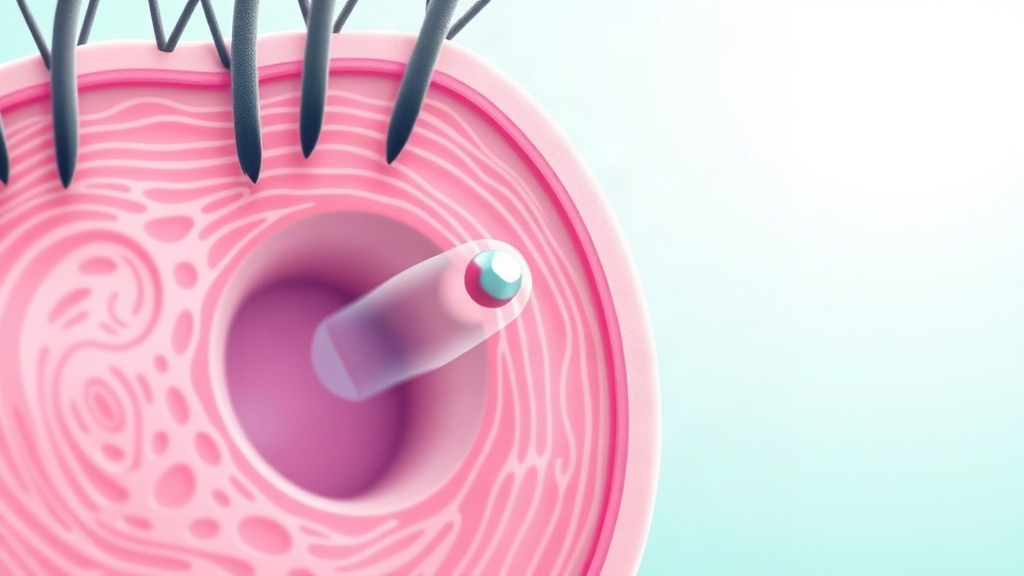
This process illustrates a broader mechanism of tissue aging: stem cell exhaustion. The hair follicle depends on a reserve of stem cells housed in the bulb and the bulge region to regenerate with each cycle. DHT, combined with age, reduces the ability of these cells to differentiate and start a new growth phase.
- Sensitivity of the androgen receptor, encoded by a gene carried on the X chromosome, passed down through the maternal line.
- Contribution of several autosomal loci identified through large-scale sequencing.
- Role of the WNT/beta-catenin pathway in maintaining the follicle’s regenerative potential.
- Progressive reduction in hair diameter and lifespan with each cycle (follicular miniaturization).
What science says about the causes of pattern baldness
Heredity explains most of the risk. A study published in the Journal of Investigative Dermatology identified four new genetic susceptibility loci and confirmed the involvement of the WNT pathway in the origin of androgenetic alopecia (Heilmann et al., 2013). A review published in the journal Endocrine summarizes the central role of DHT and genetic background in triggering and progressing baldness in men (Lolli et al., 2017).
The relative weight of non-genetic factors remains modest but real. A 2024 literature review on early-onset androgenetic alopecia lists smoking, metabolic syndrome and certain chronic stress factors among the elements associated with a younger onset, without challenging the predominance of hereditary background (Liu et al., 2024). These remain association studies: they identify factors correlated with early baldness, not direct causes demonstrated by controlled trial.
Follicle stem cells fit into a mechanism documented more broadly by basic research on cellular aging, which MedlinePlus also covers in its overview of hair loss causes and the biology behind them.
In practice: distinguishing baldness from other hair loss
Not all hair loss is baldness. Diffuse, recent shedding after a fever, childbirth or a psychological shock points more toward telogen effluvium, which is reversible within a few months. Patchy loss suggests alopecia areata, of autoimmune origin. The age-related decline in testosterone can alter the general hormonal balance without, on its own, explaining this hereditary hair loss.
| Type | Main cause | Pattern | Reversibility |
|---|---|---|---|
| Baldness (androgenetic alopecia) | Genetics plus DHT sensitivity | Temples, crown or diffuse part | Progressive, not spontaneously reversible |
| Telogen effluvium | Physiological shock (fever, deficiency, acute stress) | Diffuse across the whole scalp | Reversible in 3 to 6 months |
| Alopecia areata | Autoimmune | Localized patches | Variable, sometimes spontaneous |
| Traction alopecia | Repeated mechanical tension (tight hairstyles) | Pulled zones (temples, hairline) | Reversible if stopped early |
Hair graying follows a distinct biology, linked to the exhaustion of melanocytes rather than DHT, even though the two phenomena often coexist with age.
Protocol: what actually influences progression
No daily habit reverses androgenetic alopecia once it is genetically established. The scientific literature does, however, point to levers that slow or accompany its progression:
- An early diagnosis from a dermatologist helps distinguish baldness from reversible causes before hair loss becomes permanent.
- Validated pharmacological treatments (topical minoxidil, 5-alpha reductase inhibitors) act on the follicular cycle and require medical advice, including for assessing side effects.
- Managing chronic stress does not treat this hereditary hair loss but limits the telogen effluvium episodes that can add to it.
- Adequate intake of protein, iron and zinc prevents deficiencies that worsen an ongoing hair loss, without acting on the hormonal component.
“Anti-shedding” supplements sold without proof of efficacy in people who are not deficient do not replace this medical follow-up, and their benefit remains limited to cases of a proven deficit.
Frequently asked questions
Does baldness come more from the mother or the father?
A major gene for androgen receptor sensitivity is carried on the X chromosome, passed down exclusively from the mother. The risk therefore increases if the maternal grandfather was bald. Other identified loci are autosomal and come from both sides, which explains why paternal heredity matters too.
At what age can baldness start?
The first signs sometimes appear as early as the late teens, with a receding temple line. Prevalence then rises with age: it affects a minority of men before age 30, then increases markedly after age 40, according to available epidemiological data.
Can stress trigger baldness?
Chronic stress mainly worsens telogen effluvium, a diffuse and temporary hair loss distinct from androgenetic alopecia. It does not initiate the DHT sensitivity behind this hereditary hair loss, but it can speed up loss in someone already genetically predisposed.
Does wearing a cap or washing hair often contribute to baldness?
No scientific data links regularly wearing a hat or the frequency of shampooing to its onset. These habits influence neither DHT production nor the genetic sensitivity of follicles, contrary to a common belief.
Does pattern baldness diagnosed early progress faster?
An early onset of pattern baldness, before age 30, is statistically associated with a more pronounced progression over time, since it often reflects a heavier genetic load. This link remains probabilistic: individual progression also depends on other factors still poorly quantified by research.
Medical disclaimer. The information provided here is for informational purposes only and does not constitute medical advice. It does not replace a consultation. Ask a healthcare professional before changing your diet, taking dietary supplements or starting a new practice, especially if you have a medical condition, are pregnant or are under treatment. Dietary supplements do not replace a balanced diet or medical follow-up.