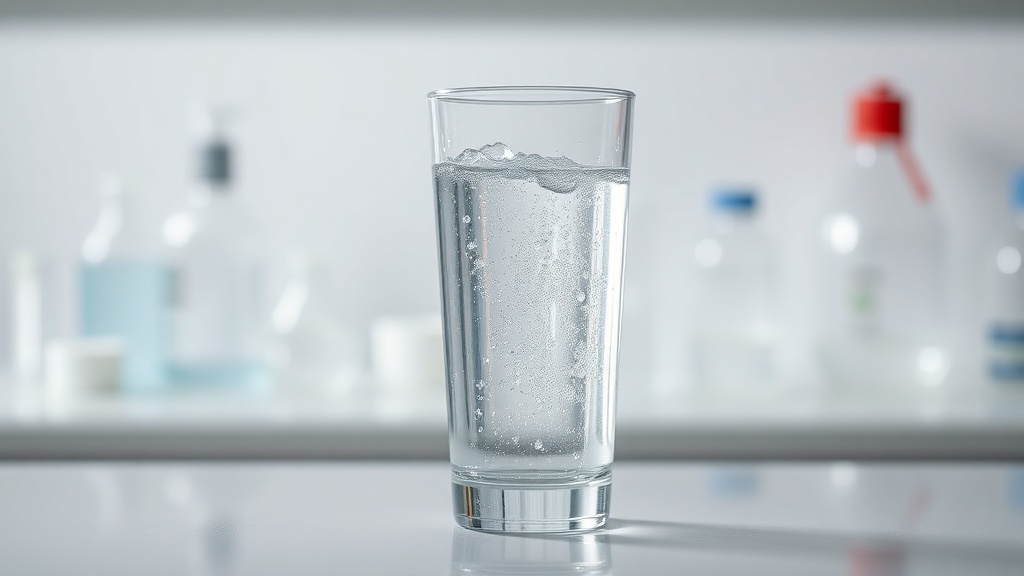
Hydrogen water is water enriched with dissolved hydrogen gas (H2), sold with the promise of slowing aging through its antioxidant power. The concept originated in Japan, where researchers showed as early as 2007 that H2 gas could neutralize certain free radicals. Since then, generators and enriched bottles have multiplied, often marketed as a “longevity water” to sip in small amounts throughout the day. What do clinical trials actually show, and does this practice deserve its reputation?
In brief – Hydrogen water is water in which dihydrogen gas (H2) has been dissolved, said to act as a targeted antioxidant against oxidative stress. Randomized trials in humans, involving small samples (30 to 60 participants) and short durations (4 to 8 weeks), report a decrease in inflammatory markers or cell death in the blood, with results sometimes non-significant depending on the population studied. No study has measured an effect on mortality or lifespan: the “longevity water” label reflects marketing, not scientific proof. Sipping this water in small, repeated amounts shows no demonstrated physiological advantage over drinking regular water the same way; dissolved H2 also escapes quickly once the bottle is opened.
Definition: What Is Hydrogen Water?
This water refers to water in which dihydrogen gas has been dissolved under pressure, either through electrolysis or via an effervescent tablet based on metallic magnesium. H2 is a colorless, odorless gas and the smallest known molecule, which allows it to diffuse easily through cell membranes. This property has driven the hypothesis of an antioxidant able to act deep inside mitochondria, unlike vitamin C or vitamin E, which remain at the periphery of the cell.
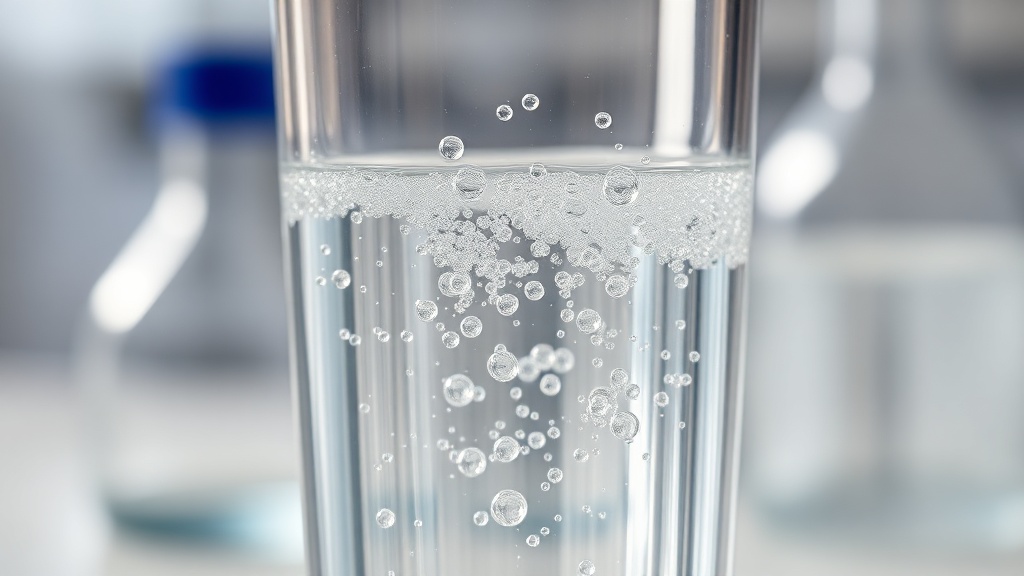
H2 concentration is measured in parts per million (ppm) or milligrams per liter. Commercial waters typically show between 0.5 and 1.6 ppm, a threshold set by the gas’s maximum solubility in water at atmospheric pressure. Beyond this threshold, the surplus escapes as bubbles, which is why these waters are sold in aluminum containers that are largely impermeable to the gas.
Mechanism: How Does Dissolved Hydrogen Act?
The proposed mechanism relies on a rare chemical selectivity: H2 is thought to react preferentially with the hydroxyl radical (OH•), the most toxic reactive oxygen species for cells, without neutralizing other free radicals that play a useful physiological role (cell signaling, immune defense). This selectivity sets hydrogen apart from classic antioxidants, which neutralize radicals indiscriminately.
- Rapid diffusion across cell membranes and the blood brain barrier due to its very small molecular size.
- Targeted reduction of the hydroxyl radical, without neutralizing reactive species useful for cell signaling.
- Indirect modulation of anti-inflammatory pathways, notably the NF-kB pathway, observed in several trials in humans.
- No accumulation in the body: surplus H2 is eliminated through the lungs within minutes.
What the Science Says About Hydrogen Water
The antioxidant hypothesis rests on work published by Ohsawa and colleagues in 2007 in Nature Medicine, showing that inhaled H2 reduced brain damage in mice subjected to an experimental stroke (Ohsawa et al., 2007). This foundational work involved inhaled gas in animals, not hydrogen water consumed by humans: the extrapolation calls for caution.
In humans, a randomized, double blind trial in 60 healthy adults compared 1.5 liters per day of this enriched water to ordinary water over four weeks. Researchers observed a decrease in white blood cell death and a reduction in inflammatory markers linked to the NF-kB pathway in the hydrogen group, with a more pronounced effect among participants over age 30 (Sim et al., 2020, Scientific Reports). An eight week controlled trial in 30 patients with fatty liver disease reported favorable trends in weight and body mass index, without reaching statistical significance on the main liver markers (Kura et al., 2022, Antioxidants).
Both trials share the same limitations: small samples, short duration, and no follow up on hard endpoints such as mortality, cardiovascular disease or cancer. The link between chronic oxidative stress and cellular aging is documented elsewhere, notably through the concept of inflammaging, which the World Health Organization addresses in its work on healthy aging (World Health Organization); but no data support the claim that this practice slows aging of the body as a whole. A drop in blood markers is not the same as gaining years of healthy life.
In Practice: Who Is It For, and in What Context?
This water does not replace any of the levers with solidly established effects on longevity, starting with adequate hydration throughout the day, whatever the water source used. Healthy people looking to limit chronic inflammation have better documented levers available: sleep, regular physical activity and a plant rich diet. Other dietary antioxidant sources, such as phycocyanin, are also backed by preliminary trials, warranting the same level of caution.
The table below compares this H2-enriched water with the main antioxidant sources discussed in recent scientific literature, based on the level of evidence available in humans.
| Source | Main mechanism | Level of evidence in humans | Effect on longevity |
|---|---|---|---|
| H2-enriched water | Targeted reduction of the hydroxyl radical | Short randomized trials, small samples | Not established |
| Polyphenols (fruits, vegetables) | Broad spectrum antioxidant plus prebiotic effect | Large cohorts, several decades | Associated with reduced mortality |
| Regular physical activity | Mitochondrial adaptation, reduced inflammation | Randomized trials and large cohorts | Reduced all cause mortality |
| Adequate sleep (7 to 8h) | Hormonal and immune regulation | Large cohorts | Associated with reduced mortality |
Protocol: How to Consume It if You Want to Try
No official protocol sets the amount or pace of consumption for this hydrogen enriched water: the clinical trials cited used between 0.5 and 1.5 liters (17 to 51 fl oz) per day, spread across the day, without a specific sipping pattern ever being compared to drinking it in a few glasses. Sipping small amounts regularly remains a generally useful hydration habit, but nothing proves it enhances the effect of dissolved H2.
- Drink the water quickly after opening: H2 gas escapes within a few tens of minutes once the container is opened to air.
- Check the H2 concentration claimed by the manufacturer, ideally measured in ppm by an independent third party.
- Do not replace medical treatment or follow up with this practice, especially in cases of inflammatory or liver disease.
- Consider this water a lifestyle add on, not a substitute for already validated longevity levers.
Frequently Asked Questions About Hydrogen Water
Does Hydrogen Water Really Make You Younger?
No. Available trials show a decrease in certain inflammatory markers and in cell death over a few weeks, not a rejuvenation of the body. No study has measured an effect on life expectancy or on overall biological aging. Talking about “rejuvenation” goes beyond what current data can support.
What Is the Difference Between Hydrogen Water and Alkaline Water?
Alkaline water is defined by a pH above 7, achieved by adding minerals, with no direct link to H2 gas. Hydrogen water is defined by its dissolved dihydrogen concentration, independent of its pH. Some products combine both properties, but they rely on distinct mechanisms and should not be confused.
Why Drink Hydrogen Water in Small Sips?
This recommendation comes from manufacturers, not from a clinical trial comparing this pace to drinking full glasses. Since H2 escapes quickly from water once the container is opened, sipping small amounts mainly limits the liquid’s exposure time to air between each sip, rather than reinforcing any proven biological effect.
Does Hydrogen Water Carry Any Risks?
Published trials have not reported notable adverse effects over four to eight week periods. Dihydrogen is a physiologically inert gas, eliminated through breathing. The main caution concerns the cost of these products and the risk of neglecting better established longevity levers in favor of a still unproven promise.
Medical disclaimer. This information is provided for informational purposes only and does not constitute medical advice. It does not replace a consultation. Ask a healthcare professional before changing your diet, taking dietary supplements or starting a new practice, especially if you have a medical condition, are pregnant or are under treatment. Dietary supplements do not replace a balanced diet or medical follow-up.