Ginseng ranks among the most studied plants in traditional East Asian pharmacopeia, and aging research has focused on it for more than two decades. A Korean cohort of nearly 6,300 people followed for 18 years measured its link with mortality, while recent randomized trials assess its effects on fatigue, immunity and markers of biological aging. What do these studies actually show, and under what conditions does using this root remain reasonable?
In brief – Ginseng is an adaptogenic root from the Araliaceae family, used for centuries in traditional Chinese and Korean medicine to support energy and resistance to stress. Its active compounds, ginsenosides, act on mitochondria, chronic inflammation and immune response, three mechanisms involved in cellular aging. An 18-year Korean cohort links regular consumption to reduced all-cause mortality in men, and several randomized trials report improvements in fatigue and antioxidant markers. These findings remain associations or short-term effects: ginseng has not been shown to extend human lifespan, and a course should stay time-limited, with precautions for people on blood thinners or diabetes medication.
Definition: what is ginseng?
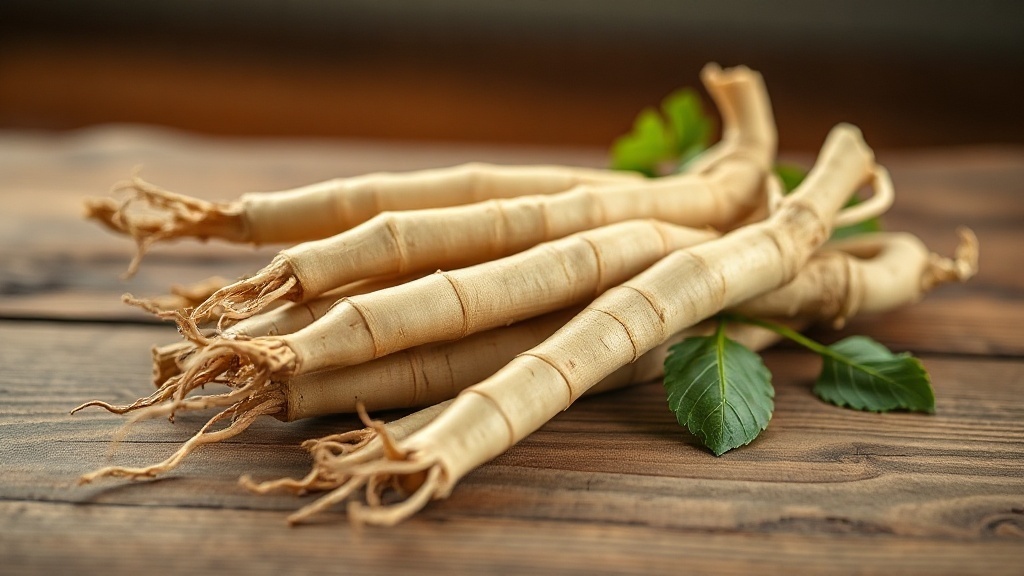
Ginseng refers to the root of several species in the genus Panax, mainly Panax ginseng, the Korean and Asian variety, and Panax quinquefolius, the North American variety. The genus name, from the Greek “panacea,” reflects its traditional reputation as a universal remedy, a reputation that modern science largely tempers. The root takes 4 to 6 years to develop before harvest; depending on the processing it undergoes, a distinction is made between the white variant (dried) and the red variant (steamed), the latter concentrating more of certain bioactive ginsenosides.
It should not be confused with eleuthero (Eleutherococcus senticosus), often sold under a misleading label even though it belongs to a distinct botanical genus and contains different compounds, the eleutherosides.
Mechanism: how ginsenosides work
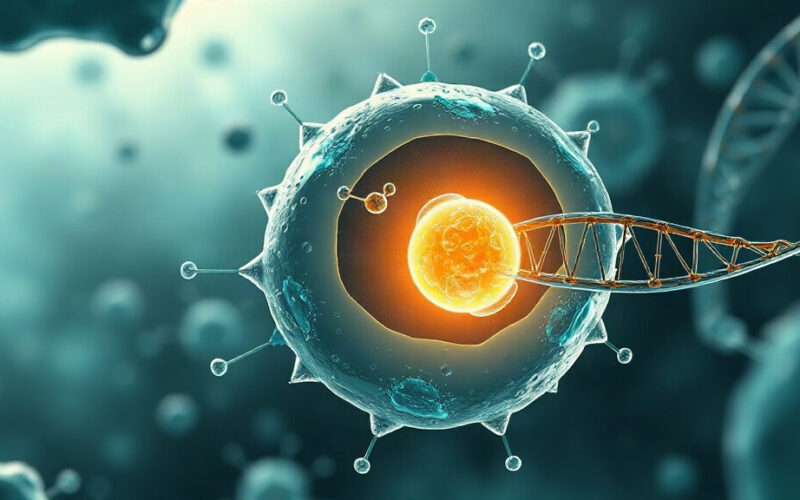
The biological activity of ginseng rests on ginsenosides, a family of triterpene saponins unique to the genus Panax. A review published in Experimental Gerontology lists their effects on several pathways linked to cellular aging:
- Mitochondrial function: ginsenoside Rg1 limits premature senescence in cultured human fibroblasts by improving mitochondrial respiration.
- Autophagy: ginsenoside Rb2 activates the AMPK-mTOR pathway, a cell recycling mechanism that declines with age.
- Oxidative stress: several ginsenosides increase the activity of endogenous antioxidant enzymes (superoxide dismutase, glutathione peroxidase).
- Chronic inflammation: ginsenosides inhibit certain pro-inflammatory cytokines involved in inflammaging, the low-grade aging of the immune system described by aging researchers.
These mechanisms come mostly from cell and animal models. They provide a plausible explanation for the effects observed in humans, without guaranteeing that they transfer identically.
What the science shows in humans
The Kangwha Cohort Study followed 6,282 Koreans aged 55 and older for 18.8 years. Men who consumed ginseng regularly had all-cause mortality 10% lower than non-consumers (HR 0.90, 95% CI 0.81-0.99), an effect not found in women (Yi et al., 2009). An association of this size, in an observational cohort, does not prove causation: other lifestyle habits among these consumers may have played a role.
On biological aging itself, a double-blind randomized trial in postmenopausal women measured the effect of 3 g/day of Korean red ginseng for 12 weeks on blood antioxidant markers: the treated group showed a significant improvement in total antioxidant capacity compared with placebo (study published in Nutrients, 2021). That is an intermediate marker, not a measured gain in life expectancy.
On fatigue, a phase III trial in 133 colorectal cancer patients undergoing chemotherapy showed a significant improvement in cancer-related fatigue after 16 weeks of Korean red ginseng, compared with placebo (randomized trial, European Journal of Cancer, 2020). A similar trial in patients with rheumatic disease reported reduced perceived fatigue after 4 weeks (Korean Journal of Internal Medicine, 2024).
On immunity, a controlled trial in 72 volunteers aged 50 to 75 measured a 35% to 40% rise in natural killer cell cytotoxic activity after 8 to 14 weeks of ginseng polysaccharides, compared with placebo (Journal of Translational Medicine, 2014). Higher NK activity in vitro does not automatically translate into fewer real-world infections.
In practice: who is it for, and when?
Current data position ginseng as an occasional support for fatigue and alertness, not an anti-aging protocol. It can fit into a broader approach to mitochondrial health, alongside other adaptogens such as rhodiola or amino acids studied for longevity such as taurine. People recovering from illness, going through prolonged fatigue, or undergoing chemotherapy (with prior medical advice) are the best-documented profiles in clinical trials.
The term covers several plants with different profiles, often confused with one another on supplement labels:
| Plant | Active compounds | Main traditional use | Level of human evidence |
|---|---|---|---|
| Panax ginseng (Korean/Asian) | Ginsenosides Rb1, Rg1, Rg3 | Fatigue, alertness, immunity | Multiple randomized trials |
| Panax quinquefolius (American) | Ginsenosides with a different profile, richer in Rb1 | Blood sugar, cognitive function | Limited randomized trials |
| Eleutherococcus senticosus (“Siberian ginseng”) | Eleutherosides (no ginsenosides) | Stress resistance | Few quality trials |
Protocol and practical advice
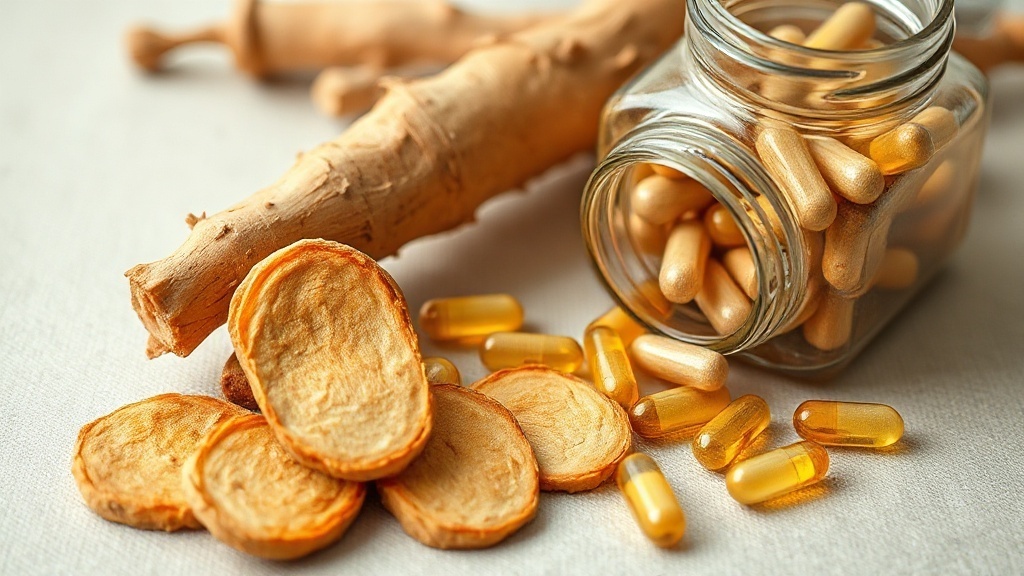
Clinical trials most often use between 1 and 3 g of dried root per day, or 200 to 400 mg of a ginsenoside-standardized extract. A few pointers for cautious use:
- Take it in the morning or early afternoon: the stimulating effect can disrupt sleep onset later in the day.
- Limit a course to 2 to 4 weeks, not exceeding 3 consecutive months, in line with French food safety agency recommendations on adaptogenic plants.
- Avoid combining it with high doses of coffee or tea, which increases nervousness and palpitations.
- Ask a doctor before use if taking anticoagulant, antidiabetic or antidepressant (MAOI) medication: ginseng can alter their effect.
- Avoid it during pregnancy, breastfeeding or poorly controlled high blood pressure, due to insufficient safety data.
In France, the national food safety agency (Anses) ranked Panax ginseng 7th among the most frequently reported plants in its nutrivigilance system, in its 2022 activity report, out of 507 reports assessed between 2016 and 2021. The National Center for Complementary and Integrative Health flags similar precautions for Asian ginseng, including possible interactions with blood thinners and diabetes medication. This does not indicate a major risk, but it does justify caution around duration and dose.
Frequently asked questions
Does ginseng really slow aging?
No human study demonstrates that it slows biological aging in general. A Korean cohort links regular consumption to reduced mortality in men, and a randomized trial shows an improvement in blood antioxidant markers in postmenopausal women. These are leads, not proof of causation for human longevity.
What is the difference between ginseng and Siberian ginseng?
The genus Panax contains ginsenosides, while eleuthero, wrongly called “Siberian ginseng,” belongs to a different botanical genus and contains eleutherosides. Both plants are used as adaptogens, but their active compounds and clinical data are not interchangeable.
Is ginseng effective against fatigue?
Several double-blind randomized trials report reduced fatigue with Korean red ginseng, in patients undergoing chemotherapy as well as in people with rheumatic disease. The effects are measured over a few weeks to a few months; data are lacking on extended use beyond the length of the trials.
What are the possible side effects of ginseng?
Taking too much can cause nervousness, insomnia, palpitations, higher blood pressure or digestive issues. In France, the food safety agency (Anses) has recorded allergy cases and ranks Panax ginseng among the ten plants most frequently reported in nutrivigilance data. Reported effects are most often reversible once use stops.
Can you take ginseng every day, all year round?
No. French recommendations limit a course to a few weeks, not exceeding three consecutive months, followed by a break. Continuous, prolonged use has not been evaluated for long-term safety and raises the risk of adverse effects reported in nutrivigilance data.
Medical disclaimer. The information above is provided for informational purposes only and does not constitute medical advice. It does not replace a consultation. Ask a healthcare professional before changing your diet, taking dietary supplements or starting a new practice, especially if you have a medical condition, are pregnant or are under treatment. Dietary supplements do not replace a balanced diet or medical follow-up.