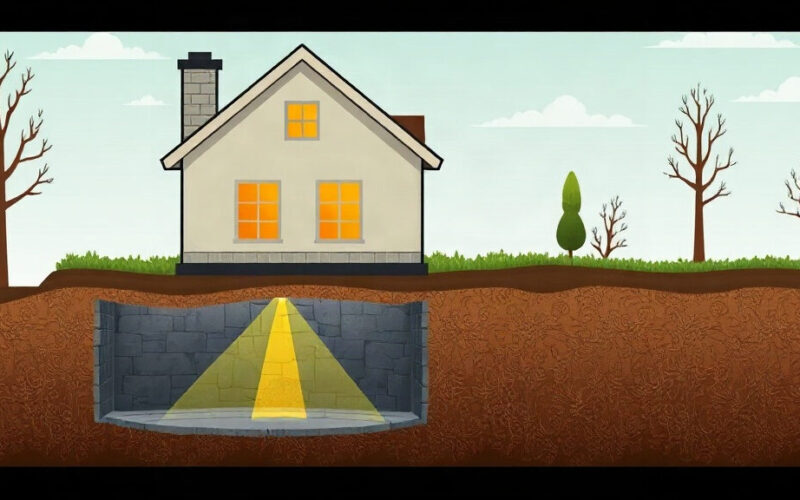
Asbestos was banned in France in 1997, but millions of tons still sit in roofs, pipes and floor tiles installed before that date. This fibrous mineral, long praised for its fire resistance, continues to act silently on the lungs of anyone who encounters it during a renovation, a DIY project or a simple wall drilling. Understanding its mechanism helps assess the real risk, without giving in to either panic or complacency.
In brief – Asbestos is a family of natural fibrous minerals used for a century for their resistance to fire, heat and corrosion, before its total ban in France in 1997. Once inhaled, its microscopic fibers lodge deep in the lungs and resist natural clearance: the macrophages meant to digest them fail and repeatedly release free radicals, sustaining chronic inflammation that damages the DNA of lung and pleural cells. This mechanism explains, decades after exposure, the onset of asbestosis, lung cancer and mesothelioma, a rare and aggressive tumor of the pleura. The risk depends on the inhaled dose, the duration of exposure and, for lung cancer, a marked synergy with smoking. Many buildings built before 1997 still contain it, which is why a diagnosis is required before any renovation work.
Asbestos: definition and properties
Asbestos refers to six natural silicate minerals with fine, resistant fibers: chrysotile, crocidolite, amosite, tremolite, actinolite and anthophyllite. Chrysotile, known as “white asbestos,” accounted for about 95% of the material used in construction in France. Its fibril structure, invisible to the naked eye, gives it exceptional mechanical and thermal resistance at a very low production cost.
- Sprayed coatings and lagging for thermal insulation of boiler rooms and technical ducts
- Fiber cement panels for roofing, siding and garden sheds
- Vinyl floor tiles and bituminous adhesives
- Gaskets, brake linings and flue pipes
The World Health Organization and the International Agency for Research on Cancer classify all varieties of asbestos as proven human carcinogens, with no exposure threshold recognized as completely safe.
How asbestos acts on your lungs
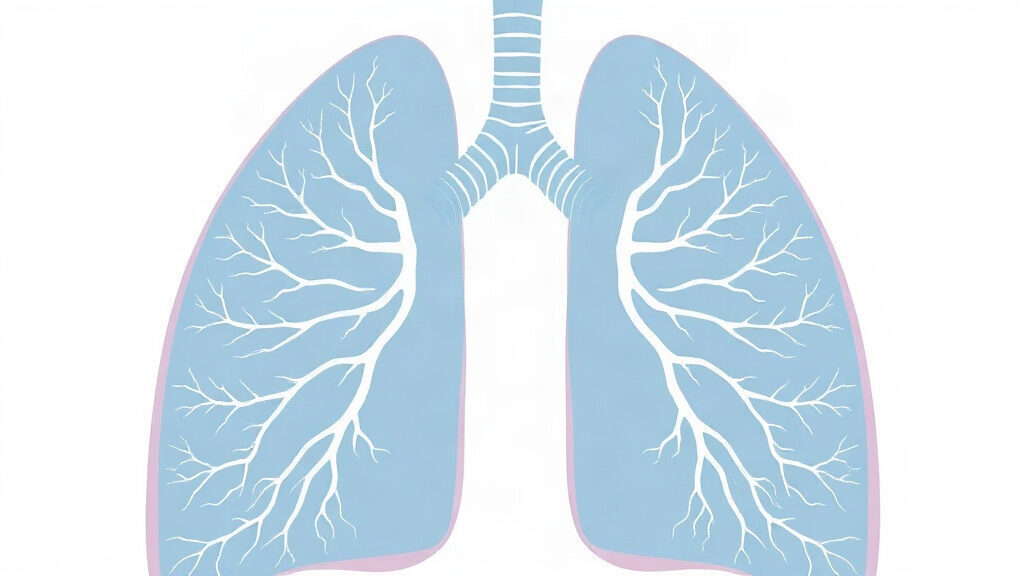
The danger does not come from the intact material but from fibers released into the air by an impact, drilling or general degradation. Once inhaled, the finest fibers reach the pulmonary alveoli and the pleura, the thin membrane that surrounds the lungs. Their elongated, rigid shape defeats the body’s natural defenses: alveolar macrophages attempt to digest them through phagocytosis, but a fiber that is too long cannot be fully encapsulated. This “frustrated phagocytosis” keeps immune cells in a state of permanent activation.
This endless struggle continuously releases reactive oxygen species and pro-inflammatory cytokines. Free radicals directly attack the DNA of mesothelial cells, causing chromosomal breaks and adducts such as 8-OHdG. The resulting chronic inflammation is amplified, in iron-rich fibers such as crocidolite, by an additional catalysis of oxidative reactions. This dual mechanism, genotoxic and inflammatory, explains why the body takes decades to develop a tumor after sometimes brief exposure. This type of cellular damage illustrates one of the ageing mechanisms grouped under genomic instability.
What the science says about asbestos and the lungs
A British cohort of 614 workers who died of mesothelioma puts the median latency period at 22.8 years. This delay is about 29% longer in women than in men (Frost 2013, British Journal of Cancer). The Italian mesothelioma registry, covering a much larger cohort, reports an average delay of 44.6 years. This delay is shorter for occupational exposures (43 years) than for environmental or domestic exposures (48 years) (Marinaccio 2007, European Journal of Cancer).
Smoking does not simply add to the risk: it multiplies it. An analysis pooling twelve epidemiological studies calculates an average synergy index of 1.64 between asbestos and smoking for lung cancer, with about one third of cancers in exposed smokers attributable to this interaction (Erren 1999, Epidemiology). At the cellular level, a review of the genotoxicity of different fiber types confirms that the capacity to induce DNA damage varies with fiber length, diameter and mineral composition, which explains the differences in hazard observed between varieties (Barlow 2013, Inhalation Toxicology).
In France, asbestos remains the leading cause of occupational cancer. National health data attribute nearly all mesothelioma cases and a substantial share of lung cancers to major asbestos exposures, a link explained in detail in the National Cancer Institute’s overview of the topic (cancer.gov). France records about 1,100 new mesothelioma cases every year. This number has doubled among women over twenty years, reaching 310 annual cases, reflecting domestic or environmental exposures that were long underestimated, a pattern also described by MedlinePlus.
In practice: where asbestos still hides in France
Any home built before July 1997 may contain asbestos. French law requires a technical diagnosis (DTA) before any sale or before renovation work affecting a roof, a partition wall or an old floor covering. This diagnosis, carried out by a certified professional, locates the materials involved and assesses their condition rather than simply confirming their presence.
The real risk depends mainly on the condition of the material. A painted, undamaged fiber cement panel releases very few fibers; the same panel sanded, broken or drilled releases them massively. This is why amateur DIY work (drilling, cutting, demolition) is now one of the main sources of residual exposure, long after industrial use ended. This finding echoes other invisible indoor pollutants, such as radon, where silent accumulation is also what creates the danger, or outdoor air pollution, whose fine particles share a comparable pulmonary inflammatory mechanism. Smoking, meanwhile, remains the factor that most strongly multiplies this cumulative respiratory risk.
| Disease | Main mechanism | Onset delay | Prognosis |
|---|---|---|---|
| Pleural plaques | Localized fibrosis of the pleura, benign reaction to fibers | 10 to 20 years | Usually asymptomatic, simple monitoring |
| Asbestosis | Diffuse fibrosis of lung tissue linked to massive exposure | 15 to 30 years | Chronic, irreversible, variable severity |
| Lung cancer | DNA damage to bronchial cells, synergy with smoking | 20 to 30 years | Depends on stage at diagnosis |
| Pleural mesothelioma | Genotoxicity and chronic inflammation of the pleura | Often more than 30 years | Rare and aggressive tumor |
Protocol: responding to a suspected asbestos risk
No individual action can neutralize a fiber that has already been inhaled. Prevention therefore consists entirely of avoiding the resuspension of the material and calling on the right professionals.
- Never sand, drill, cut or break a suspected material without a prior diagnosis
- Check the home’s technical diagnosis (DTA) before starting renovation work
- Call in a certified company for any removal or containment of the material involved
- Ventilate and dampen the area if a material has been accidentally damaged, then contact a professional rather than cleaning it up yourself
- Report any past occupational exposure to your doctor for appropriate respiratory follow-up
For a former employee who was exposed, a post-occupational medical follow-up program exists in France and allows regular radiological monitoring, useful given the very long latency periods between exposure and disease.
Frequently asked questions about asbestos
How does asbestos get into the lungs?
Fibers disperse into the air when a material containing them is broken, sanded or drilled. Once inhaled, the finest fibers reach the pulmonary alveoli and the pleura. Their rigid shape prevents macrophages from eliminating them completely, which sustains inflammation and cellular damage over the long term.
What is the difference between asbestosis and mesothelioma?
Asbestosis is a fibrosis of lung tissue linked to massive, prolonged exposure, with an onset delay of 15 to 30 years. Mesothelioma is a rare tumor of the pleura that can occur after much lower exposure, with a delay often exceeding 30 years. Both result from the same inflammatory and genotoxic mechanism.
Why does smoking worsen the risk linked to asbestos?
Smoking and occupational exposure both act on bronchial cells through inflammatory and genotoxic pathways that reinforce each other. An analysis of twelve epidemiological studies calculates a synergy index of 1.64, with about one third of lung cancers in exposed smokers attributable to this interaction between the two factors.
Is a home built before 1997 necessarily dangerous?
No. The presence of this material does not mean immediate danger as long as it remains intact and undamaged. The technical diagnosis precisely assesses its condition. The real risk mainly appears during renovation work that releases fibers into the air, which is why it is worth checking this diagnosis before any renovation.
What should you do if you suspect asbestos in your home?
Avoid any contact with or work on the suspected material and check the home’s technical diagnosis, mandatory for properties built before 1997. If in doubt or in case of damage, call a certified inspector rather than attempting to identify or remove it yourself.
Medical disclaimer. The information provided here is for informational purposes only and does not constitute medical advice. It does not replace a consultation. Ask a healthcare professional before changing your diet, taking dietary supplements or starting a new practice, especially if you have a medical condition, are pregnant or are under treatment. Dietary supplements do not replace a balanced diet or medical follow-up.