
Pet ownership is linked, in large cohorts, to lower cardiovascular mortality, especially among people who live alone. Swedish, British and American researchers have followed millions of dog and cat owners to measure four effects: survival, outcome after a heart attack, the stress response and mood. The results are encouraging for the heart and more nuanced for depression. Here is what the figures show, where their limits lie and which precautions are worth taking after 60.
In brief – Pet ownership means living with a domestic companion animal, most often a dog or a cat, and it is associated with better cardiovascular health in owners. A 2019 meta-analysis of 3.8 million people links dog ownership to 24% lower all-cause mortality and 31% fewer cardiovascular deaths. After a heart attack, dog owners who live alone have a 33% lower risk of death in a Swedish registry of 181,696 patients. A pet also dampens the rise in heart rate under stress and is associated with less loneliness after 60. However, a meta-analysis of 21 studies (159,322 participants) finds no overall link with depression. This research is observational: it shows an association, not proof of cause, and the American Heart Association advises against adopting an animal for the sole purpose of protecting your heart.
Pet ownership and health: what do the studies measure?
In public health, a pet is a domestic animal kept for companionship rather than for work or breeding: a dog, cat, bird, rabbit or fish. Researchers distinguish two situations. Ownership means living with a pet for years, and it lends itself to large cohorts. Interaction measures what happens during a few minutes of contact, for example during an animal-assisted therapy session in a hospital or a nursing home.
This distinction changes how the results should be read. Long-term effects, such as mortality or outcome after a heart attack, come almost entirely from observational studies, which compare owners and non-owners without randomization. Immediate effects on heart rate or anxiety come from shorter experiments, some of them controlled. No trial has yet randomly assigned a dog to thousands of people and tracked their hearts for ten years.
| Study type | Example | What it shows | Main limitation |
|---|---|---|---|
| National cohort | 3.4 million Swedes followed for up to 12 years | Association between dog ownership and mortality | Unmeasured factors, such as smoking |
| Meta-analysis of cohorts | 10 studies, 3.8 million people | Average trend across several countries | Poorly adjusted data |
| Laboratory experiment | 240 couples given a mental arithmetic task | Immediate effect on heart rate and blood pressure | A single team, results rarely replicated |
| Meta-analysis of interventions | 28 articles, 1,310 participants | Effect of a session with an animal | Short duration, very varied populations |
Mechanism: how a pet may act on the heart
The link between pets and the heart runs first through walking, then through stress, attachment hormones and relief from isolation. Walking a dog requires daily activity in all weather, and this regularity matters more than intensity. The other pathways act more quietly, but they add up over the years.
- Walking: in a review of 29 studies, about 60% of dog owners walk their dog, for a median of 160 minutes per week (Christian et al., 2013).
- The stress response: the presence of a pet limits the rise in heart rate during a difficult task, then speeds up the return to calm.
- Oxytocin, the bonding hormone, rises in both the owner and the dog after a prolonged exchange of gazes (Nagasawa et al., 2015).
- Social connection: taking a dog out multiplies conversations with neighbors and other walkers.
- Routine: feeding, grooming and walking a pet gives structure to the day, a useful anchor after retirement or bereavement.
Walking remains the best-documented lever. Regular endurance activity maintains the ability of the heart and muscles to produce energy. However, no study has directly measured the mitochondria of pet owners: this benefit comes from exercise, not from the animal itself. The role of the attachment hormone is detailed in our article on oxytocin and its effects on stress and the heart.
One bias complicates the interpretation of cohorts. Healthy people are more likely to adopt a dog, and those who fall ill sometimes have to give theirs up. This healthy owner effect can inflate the gaps observed between pet owners and non-owners, even after adjusting for age and known diseases.
What the science says: the 4 measured effects of pet ownership
The best-established benefit of pet ownership concerns the cardiovascular survival of dog owners, especially when they live alone. The effect on depression, by contrast, does not show up in recent meta-analyses. Here are the four measured effects, from the most robust to the most fragile.
Effect 1: fewer cardiovascular deaths among dog owners
The Kramer meta-analysis pools 10 studies and 3,837,005 participants, followed for an average of 10.1 years. Living with a dog is associated with 24% lower all-cause mortality (RR 0.76) and 31% fewer cardiovascular deaths (RR 0.69) (Kramer et al., 2019). The authors themselves point out that the pooled analyses were not adjusted for confounding factors.
The Swedish cohort led by Mubanga refines this picture. Among 3,432,153 adults followed for up to 12 years, dog owners living alone had 33% fewer deaths (HR 0.67) and 36% fewer cardiovascular deaths (HR 0.64). In households of several people, the gap shrinks to 11% (Mubanga et al., 2017). Hunting breeds, which need more outings, are associated with the lowest cardiovascular risk. In the subgroup of 34,202 twins, the result did not hold, which calls for caution.
Effect 2: better survival after a heart attack or stroke
The same Swedish registry followed 181,696 patients after a heart attack and 154,617 after an ischemic stroke, all aged 40 to 85. After a heart attack, dog owners living alone had a 33% lower risk of death (HR 0.67), compared with 15% for those living with a partner or a child (Mubanga et al., 2019). After a stroke, the reduction reached 27% in people living alone (HR 0.73). The authors could not account for smoking, a major factor in prognosis.
Not all studies point in this direction. In Australia, among 424 patients hospitalized for acute coronary syndrome, owning a pet was associated with more deaths or readmissions at one year, particularly among cat owners (Parker et al., 2010). The sample is modest, but it is a reminder that the benefit does not apply to every profile.
Effect 3: a calmer heart rate under stress
In an experiment on 240 married couples, pet owners had a lower resting heart rate and blood pressure than the others. Faced with mental arithmetic or a hand plunged into ice-cold water, their rise was smaller and their return to calm faster, especially when the animal was present (Allen et al., 2002). A study by the same team on 48 people with hypertension measured a systolic pressure under stress of 131 mmHg in those who had adopted a pet, versus 141 mmHg with medication alone (Allen et al., 2001). These findings have not been reproduced identically by other researchers.
The Ein meta-analysis, which pools 28 articles and 1,310 participants, confirms a drop in heart rate, anxiety and perceived stress after a session with an animal. However, it finds no significant drop in blood pressure (Ein et al., 2018). The calming effect of a pet therefore seems real, but modest and short-lived.
Effect 4: less loneliness, but not less depression
Among 830 primary care patients over 60, pet owners reported feeling lonely 36% less often (adjusted OR 0.64). The most exposed profile was people living alone without a pet (Stanley et al., 2014). An English cohort of 7,945 adults over 50 also links pet ownership to a slower decline in verbal memory, only among those who live alone (Li et al., 2023).
Depression tells a different story. A 2025 meta-analysis pooling 21 studies and 159,322 participants finds no overall link between pet ownership and the risk of depression (OR 1.03). Cat owners show a very slightly higher risk (OR 1.06), a result the authors describe as complex and which proves no harmful effect of cats (Moshfeghinia et al., 2025). For dogs, the association is not significant (OR 0.93).
| Measured effect | Reference study | Key figure | Strength |
|---|---|---|---|
| Cardiovascular mortality | Kramer, 2019 (3.8 million people) | 31% fewer cardiovascular deaths with a dog | Moderate: observational studies |
| Survival after a heart attack | Mubanga, 2019 (181,696 patients) | 33% fewer deaths among people living alone | Moderate: smoking not accounted for |
| Stress response | Ein, 2018 (1,310 participants) | Lower heart rate and anxiety, unchanged blood pressure | Low to moderate: short-lived effects |
| Loneliness | Stanley, 2014 (830 patients over 60) | 36% less reported loneliness | Low: cross-sectional study |
| Depression | Moshfeghinia, 2025 (159,322 participants) | No overall link (OR 1.03) | Moderate: consistent null result |
The American Heart Association drew a cautious conclusion in its 2013 scientific statement. In its view, pet ownership, particularly owning a dog, is probably associated with a lower cardiovascular risk, with no proven causal link. It adds that adopting a pet for the sole purpose of reducing this risk is not recommended (Levine et al., 2013).
In practice: which pet suits your profile?
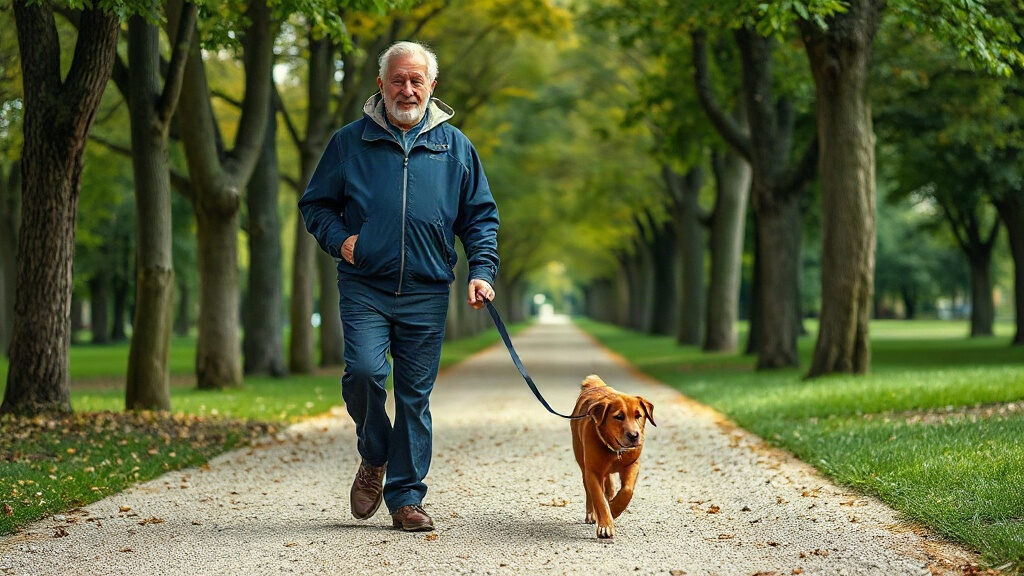
The potential benefit of pet ownership depends mainly on your lifestyle and your ability to care for an animal. The most favorable data concern dogs in people who live alone, because a dog combines daily walking and companionship. A cat offers company without mandatory outings, but cardiovascular studies on cats remain scarce and contradictory.
For walking, the figures are clear. In a British survey of 191 dog owners and 455 adults without a dog, the dog owners were four times more likely to reach the recommended 150 minutes of weekly activity (OR 4.10) (Westgarth et al., 2019). According to the World Health Organization, 31% of adults worldwide, or 1.8 billion people, do not reach this threshold. To fit these walking minutes into your routine, see our analysis of the number of steps that matters at your age.
For isolation, a pet does not replace human contact, but it can soften its absence. The effects of loneliness on health and longevity are now well documented, and people who live alone are also the group in which cohorts observe the clearest gaps. Our mitochondrial dysfunction pillar explains why regular endurance activity supports the energy of heart and muscle cells.
| Criterion | Dog | Cat | Bird, fish, rabbit |
|---|---|---|---|
| Physical activity | Required daily walks, a median of 160 minutes per week | No mandatory outings | Very low |
| Heart data | Several favorable cohorts (mortality, survival after a heart attack) | Scarce and contradictory | Almost nonexistent |
| Effect on loneliness | Companionship and contact with other walkers | Companionship at home | Companionship, limited interaction |
| Constraints | Several outings a day, pet care needed when you are away | Litter box, more independent animal | Simple care, cage or aquarium |
| Fall risk | 31% of falls caused by tripping over the dog, 21% by a dog pulling or pushing | 66% of falls caused by tripping over the cat | Low |
Tips for welcoming a pet safely after 60
Pet ownership remains beneficial as long as caring for the animal fits the owner’s health, home and budget. Falls are the main danger. In the United States, emergency departments record about 86,629 falls linked to a dog or cat each year, with the highest rate after age 75, and fractures dominate the injuries (Stevens et al., 2010). Infections passed from animals to humans, called zoonoses, are largely preventable through vaccination and hygiene, as the WHO points out in its fact sheet on zoonoses.
- Choose a calm dog whose size suits your strength, and train it to walk on a leash without pulling.
- Keep floor walkways clear, light hallways at night and note where the animal sleeps so you do not trip over it.
- Have your pet vaccinated and dewormed on the vet’s schedule, and wash your hands after cleaning the litter box or picking up after your dog.
- Check for a possible allergy before adopting by spending several hours with a friend or relative who owns the same species.
- Arrange pet care in case of hospitalization or travel, and set aside an annual budget for food and vet bills.
- If adopting is not possible, walking a neighbor’s dog or volunteering at a shelter gives you the walking and the contact without the daily responsibility.
For people who are immunocompromised, pregnant or undergoing chemotherapy, a doctor’s advice is essential before taking in a pet, particularly a cat (toxoplasmosis) or a reptile (salmonella). For someone who lives alone and walks little, a calm dog remains the pet whose profile best matches the available data, provided it can be walked every day.
Frequently asked questions about pet ownership and health
Does pet ownership really help you live longer?
Studies show an association, not proof of cause. A meta-analysis of 10 studies and 3.8 million people links dog ownership to 24% lower mortality. Dog owners walk more and are often healthier to begin with, which explains part of the gap. No randomized trial has yet tested the effect of pet ownership on lifespan.
Why is the evidence more favorable for dogs than for cats?
Dogs require daily outings: in a review of 29 studies, owners walk their dog a median of 160 minutes per week. This regular activity acts on blood pressure, weight and blood sugar. A cat offers companionship, but no exercise. Cardiovascular studies on cats are also far fewer, and one of them, involving 424 heart patients, found a worse prognosis among cat owners.
Does having a pet lower blood pressure?
The effect on blood pressure remains uncertain. A meta-analysis of 28 articles and 1,310 participants shows that a session with an animal slows heart rate and reduces anxiety, with no significant drop in blood pressure. Older experiments on 240 couples found a smaller rise in blood pressure during stress, but they have not been replicated. A pet never replaces blood pressure medication.
Does pet ownership help with depression?
The data do not show it. A 2025 meta-analysis pooling 21 studies and 159,322 participants finds no overall link between owning a pet and the risk of depression. Pet ownership is, however, associated with less loneliness among people over 60 who live alone. Depression calls for a doctor or a psychologist: a pet can support that care, not replace it.
What are the risks of pet ownership for an older adult?
The main risk is falling. In the United States, about 86,600 falls a year linked to a dog or cat end up in the emergency department, with the highest rate after age 75. Two out of three cat-related falls come from tripping over the animal. Next come zoonoses, allergies and bites. A calm, well-trained dog, clear floors and regular veterinary care limit these risks.
Should you adopt a pet to protect your heart?
Not for that purpose alone. In its 2013 statement, the American Heart Association considers that owning a pet, especially a dog, is probably associated with a lower cardiovascular risk, but it advises against adopting solely for that reason. Quitting smoking, physical activity, blood pressure control and a balanced diet remain the priority levers. A pet becomes an asset when you have the time and the desire to care for it.
Medical disclaimer. The information on this page is provided for informational purposes only and does not constitute medical advice. It does not replace a consultation. Ask a healthcare professional before changing your diet, taking dietary supplements or starting a new practice, especially if you have a medical condition, are pregnant or are under treatment. If you have an allergy, a weakened immune system, are pregnant or are at risk of falling, ask your doctor before bringing a pet home. A pet never replaces cardiovascular treatment or medical follow-up.