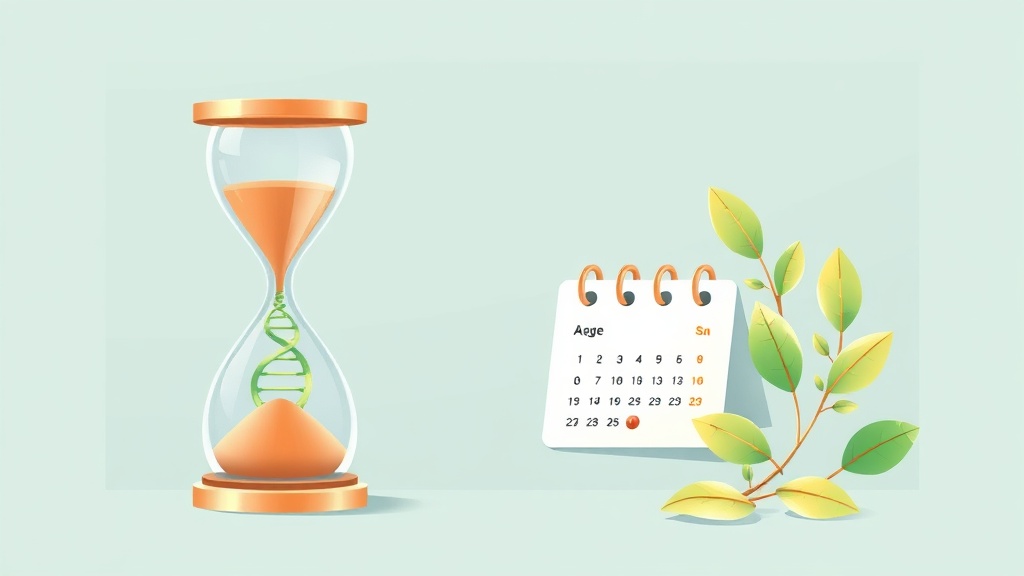
You may be 50 according to your birth certificate, but how old is your body really? That is the whole difference between chronological age and biological age. It reflects the real condition of your cells and organs, and unlike birthday candles, it can move in either direction. Can you actually get younger, biologically speaking? Here is what the science says, without overselling the case.
In brief – Biological age is a measure of how worn your cells, blood vessels and metabolism actually are, unlike chronological age, which simply counts the years since birth. It can be estimated with epigenetic clocks that track DNA methylation, blood biomarkers such as glucose and inflammation, and fitness tests like grip strength or walking speed, though consumer tests vary widely in accuracy. A small pilot trial in men aged 50 to 72 found that an 8 week program combining diet, sleep, exercise and stress management lowered epigenetic age by about 2 years compared with baseline. The realistic takeaway is that lifestyle can slow, and sometimes slightly nudge back, the aging process. It cannot turn back the clock by decades. Diet, physical activity, sleep, hydration and stress management remain the most reliable levers for keeping the body younger than the number on a birth certificate.
Chronological Age vs. Biological Age: What Is the Difference?
Chronological age is simply the number of years since your birth: it moves forward relentlessly. Biological age, by contrast, tracks how much the body has actually worn down: the state of your cells, blood vessels, metabolism and level of inflammation. Two people who are the same age on paper can show very different aging patterns depending on lifestyle and genetics.
A result below your real age is generally a good sign. A result higher than your chronological age points to accelerated aging and a greater risk of disease.
How Is Biological Age Measured?
Several methods exist, with varying degrees of reliability:
- Epigenetic clocks. These analyze DNA methylation, a marker that changes with age. The Horvath clock is the best known.
- Blood biomarkers. Blood sugar, inflammation and lipid profile give an indirect picture of aging.
- Physical fitness tests. Grip strength, VO2 max and walking speed are all correlated with longevity.
| Method | What it measures | Caveat |
|---|---|---|
| Epigenetic clocks (e.g. Horvath) | DNA methylation patterns that shift predictably with age | Mostly a research tool; consumer kits vary in accuracy |
| Blood biomarkers | Blood sugar, inflammation markers, lipid profile | An indirect signal that needs a clinician’s interpretation |
| Physical fitness tests | Grip strength, VO2 max, walking speed | Correlated with longevity, not a stand alone diagnosis |
A word of caution: these tests sold to the public vary widely in quality and should be interpreted carefully. They remain research tools first, not a definitive verdict.
Can You Really Get Younger?
This is the question everyone wants answered. A few studies suggest the answer is yes, at least partly. In a pilot trial of 43 men aged 50 to 72, an 8 week program combining diet, sleep, exercise and stress management lowered the treated group’s epigenetic age by roughly 2 years compared with baseline (Fitzgerald et al., Aging, 2021).
Promising, but it needs context: this was a small trial, run over a short period, using measurement tools that are still imperfect. You do not get ten years younger in two months. The realistic message is that lifestyle can slow, or modestly nudge back, the aging process: it does not turn back the clock.
What Influences Your Biological Age
Many everyday factors speed up or slow down cellular aging:
- Diet. A plant-rich diet is protective; an ultra-processed one accelerates aging.
- Physical activity. Regular movement is associated with slower aging.
- Sleep and stress. An imbalance in either sustains low grade inflammation.
- Hydration. One study linked inadequate hydration (high blood sodium) to accelerated biological aging (Dmitrieva et al., eBioMedicine, 2023).
4 Levers to Slow Your Biological Age
The good news: the effective levers are the same ones that support longevity in general.
- Eat well. Favor foods that support longevity.
- Move every day. Regular walking is already enough to make a difference.
- Hydrate and sleep well. Two simple pillars, covered in detail in our article on hydration and longevity.
- Manage stress and maintain social connections, both of which have a major impact on aging.
These habits, gathered in our 10 habits for a longer life, form the most solid strategy for keeping a body younger than its real age. For more on the topic, the World Health Organization outlines several approaches to slowing the aging process.
Frequently Asked Questions
How can you find out your biological age?
Epigenetic tests and blood panels can estimate it, though their reliability varies. A standard checkup and simple markers (blood pressure, waist circumference, fitness level) already give useful clues.
Can you reverse biological aging?
The evidence suggests a healthy lifestyle can slow it, and sometimes reduce it slightly. This is not about getting decades younger, it is about aging more slowly.
Are online aging tests reliable?
Treat them with caution. Many lack solid scientific validation: they can serve as a rough marker, not a medical diagnosis.
What is the single most important factor?
No factor works alone. It is the combination of diet, physical activity, sleep, stress management and social connection that has the greatest impact on aging.
Medical disclaimer. The information provided here is for informational purposes only and does not constitute medical advice. It does not replace a consultation. Ask a healthcare professional before changing your diet, taking dietary supplements or starting a new practice, especially if you have a medical condition, are pregnant or are under treatment. Dietary supplements do not replace a balanced diet or medical follow-up.