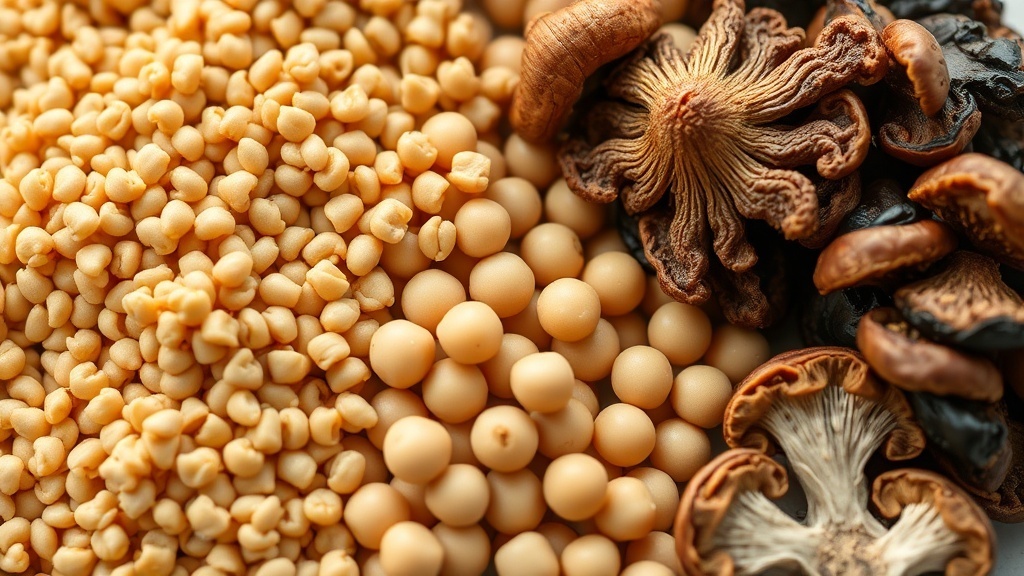
Spermidine is a natural polyamine found in every living cell and in foods such as wheat germ, fermented soybeans and dried mushrooms. Since 2009, a series of studies in aging biology has linked this molecule to the activation of autophagy, the cellular cleanup mechanism that declines with age. In yeast, flies, worms and mice, this polyamine extends lifespan; in humans, large cohort studies link a high dietary intake to lower mortality.
In brief – Spermidine is a polyamine found in cells and in foods like wheat germ, fermented soybeans and dried mushrooms, known for stimulating cellular autophagy. In yeast, flies, worms and mice, it has reproducibly extended lifespan (Eisenberg et al., 2009 and 2016). In humans, the Bruneck study (Kiechl et al., 2018, n=829, 20-year follow-up) links a high dietary spermidine intake to a 24% reduction in all-cause mortality, a gap comparable to 5.7 fewer years of age. These findings remain associations and animal trials: no health agency currently validates a human lifespan extension from supplementation, and autophagy remains a research avenue, not a validated anti-aging protocol.
Definition: What Is Spermidine?
Spermidine belongs to the polyamine family, alongside putrescine and spermine. These small, positively charged molecules bind to DNA, RNA and certain proteins, and take part in cell division, genetic material stability and gene expression regulation. The body produces its own supply through the decarboxylation of ornithine and then methionine, but this endogenous synthesis declines with age. The gut microbiome also produces part of it, and diet supplies the rest.
This internal production gradually decreases after age 40 to 50, a decline that coincides with the drop in autophagic activity observed in several tissues. This chronological coincidence is what steered research by Frank Madeo and Guido Kroemer’s team toward a possible geroprotective role for the molecule (Madeo et al., Science, 2018).
Mechanism: How Spermidine Acts on Cells
Spermidine inhibits certain acetyltransferase enzymes, which changes histone acetylation and promotes the expression of genes linked to autophagy. In practice, it pushes the cell to break down and recycle its damaged components: misfolded proteins, failing mitochondria and aggregates. This process naturally slows with age, and its decline is associated with the buildup of cellular waste in many animal models.
- Induction of autophagy through inhibition of histone acetyltransferases (an effect demonstrated in yeast, fruit flies and roundworms).
- Improved cardiac mitophagy and diastolic function in aged mice (Eisenberg et al., Nature Medicine, 2016).
- Reduced subclinical inflammation and a protective effect on cardiomyocytes in the same mouse models.
- A partial antioxidant effect, limiting oxidative-stress-related cell death in cultured human immune cells in vitro.
What the Science Says About Spermidine and Longevity
The foundational work by Eisenberg and colleagues (Nature Cell Biology, 2009) showed that supplementing with this polyamine extends lifespan in yeast, flies and worms, with an effect that depends on autophagy: in organisms genetically unable to activate this mechanism, the benefit disappears. Seven years later, the same team reproduced a cardioprotective effect and a lifespan extension in aged mice fed the molecule, along with preserved heart function and reduced ventricular hypertrophy (Eisenberg et al., Nature Medicine, 2016).
In humans, the Bruneck cohort study followed 829 residents of South Tyrol for 20 years. All-cause mortality fell from 40.5 to 23.7, then to 15.1 deaths per 1000 person-years, according to dietary intake tertile. After adjusting for age, sex, smoking and cardiovascular risk factors, the risk of death remained 24% lower in the highest-intake tertile (hazard ratio 0.76; 95% CI 0.67 to 0.86), a result independently confirmed in the SAPHIR cohort (Kiechl et al., American Journal of Clinical Nutrition, 2018).
This human data remains observational: it shows an association between dietary intake and lower mortality, not proof that supplementation extends human lifespan. No large randomized controlled trial has measured mortality as a primary endpoint in humans. European health authorities have not approved any health claim for this compound as a dietary supplement. Biological aging involves many mechanisms acting in parallel; autophagy is only one of them, and activating it with a compound does not guarantee a measurable slowdown of human aging.
In Practice: Where to Find Spermidine and Who It’s For
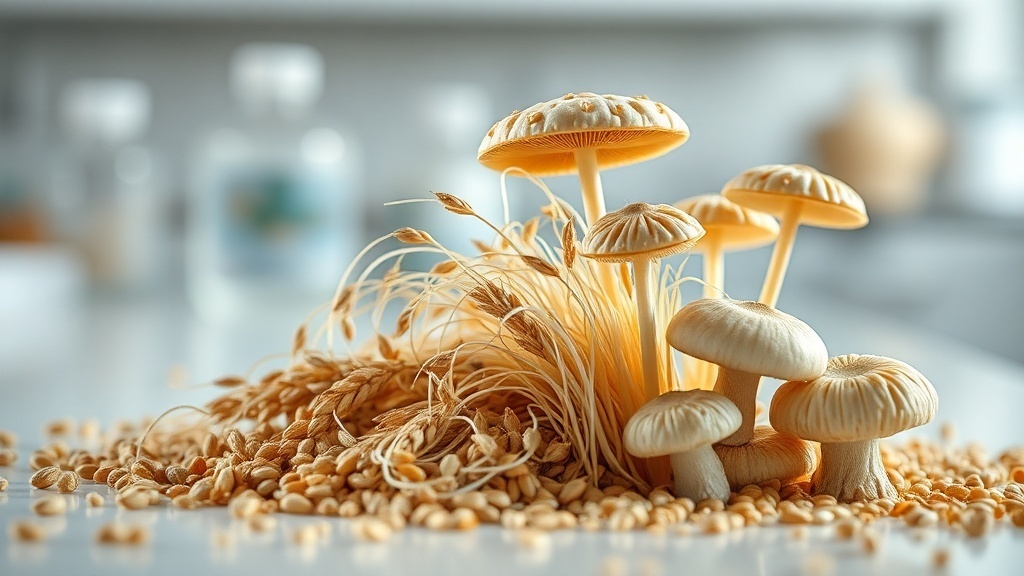
Dietary spermidine is concentrated in a limited number of foods, with wide variation in content depending on freshness and fermentation. Wheat germ and fermented legumes like natto rank among the richest sources, followed by certain aged cheeses and dried mushrooms. A broader look at longevity levers shows that this polyamine belongs to a family of dietary compounds studied for their effects on cellular aging, alongside the polyamines found in Japanese mushrooms.
| Food | Spermidine (mg/100 g, order of magnitude) | Note |
|---|---|---|
| Wheat germ | About 2.4 to 24 depending on the measurement | The most concentrated plant source identified |
| Natto (fermented soybeans) | About 20 to 25 | Long fermentation, content varies by batch |
| Dried mushrooms (shiitake) | About 2 to 9 | Drying concentrates the content compared with fresh |
| Aged cheeses (cheddar, brie) | About 0.3 to 4 | Increases with aging time |
| Legumes (peas, lentils) | About 0.3 to 1.3 | Regular but diluted intake |
| Apple, pear, lettuce | Less than 0.1 to 0.3 | Modest but possible daily contribution |
Dietary supplements made from wheat germ extract rich in this polyamine are available on the European market, but their dosing is not standardized and no reference daily intake has been set by EFSA. Endogenous synthesis and gut microbiome production add to dietary intake, which makes it difficult to isolate the effect of a single food on a person’s overall status.
Protocol and Practical Tips
No supplementation protocol involving this compound is currently validated by any health agency. The best documented approaches remain dietary and connect with other autophagy activation strategies already covered on UltraSante, such as the fasting mimicking diet or maintaining adequate NAD+ status, a cofactor involved in the same metabolic pathways of cellular aging.
- Favor a variety of regular dietary sources (legumes, whole grains, mushrooms) rather than a single concentrated food.
- Do not exceed usual intake levels without medical advice: long-term safety data on high supplemental doses remain limited.
- Report any supplementation to a healthcare professional if taking anticoagulants, during pregnancy or with a chronic condition.
- Consider this polyamine as one research avenue among other longevity factors (sleep, physical activity, overall diet), not as a standalone solution.
The World Health Organization notes that slowing biological aging, including aging of the immune system, results from the interaction of many cellular mechanisms rather than a single factor (WHO).
Frequently Asked Questions
What exactly is spermidine?
Spermidine is a natural polyamine found in every living cell, involved in cell division and gene regulation. The body synthesizes it, the gut microbiome produces some, and diet supplies a variable share depending on the foods eaten.
Does spermidine really extend lifespan?
In yeast, flies, worms and mice, controlled studies show a measurable lifespan extension after supplementation. In humans, only association studies exist: a high dietary intake is linked to lower mortality, without direct causal proof established by a randomized trial.
Which foods contain the most spermidine?
Wheat germ, natto, dried mushrooms and aged cheeses are among the most concentrated dietary sources. Legumes and certain fruits and vegetables provide more modest but regular amounts across meals.
Can you take spermidine as a dietary supplement?
Supplements exist, but EFSA has not set a reference daily intake, and long-term safety data on high doses remain limited. Medical advice is recommended before any supplementation, particularly for those on anticoagulant treatment or with a chronic condition.
What is the difference between spermidine and autophagy?
Spermidine is a molecule; autophagy is a cellular cleanup and recycling process that this molecule helps activate. It acts as one of the possible triggers of autophagy, alongside other levers such as fasting or calorie restriction.
Medical disclaimer. This information is provided for informational purposes only and does not constitute medical advice. It does not replace a consultation. Ask a healthcare professional before changing your diet, taking dietary supplements or starting a new practice, especially if you have a medical condition, are pregnant or are under treatment. Dietary supplements do not replace a balanced diet or medical follow-up.