Cold exposure (cold showers, ice water immersion, cryotherapy) triggers physiological mechanisms that have been measured in the lab since the 2000s. Five effects stand out in the most solid controlled trials and meta-analyses on the topic: noradrenaline, insulin sensitivity, muscle recovery, sick-day absence, and a possible brake on muscle gain. Here is what these studies actually show, in healthy adults and in people with type 2 diabetes.
In brief – Cold exposure is a practice that involves subjecting the body to low temperatures (cold shower, water immersion at 50-59°F/10-15°C, whole-body cryotherapy) for a few minutes to trigger an adaptive physiological stress response. Controlled trials report five reproducible effects: a marked rise in plasma noradrenaline after immersion at 57°F (14°C), improved insulin sensitivity in people with type 2 diabetes after repeated acclimation, a temporary reduction in post-exercise soreness, a 29% drop in sick-day absence among people who take daily cold showers, and a documented brake on muscle mass gain when immersion systematically follows a resistance training session. These effects remain modest or limited to specific populations: no study supports a detox effect or a reversal of aging.
What is cold exposure?
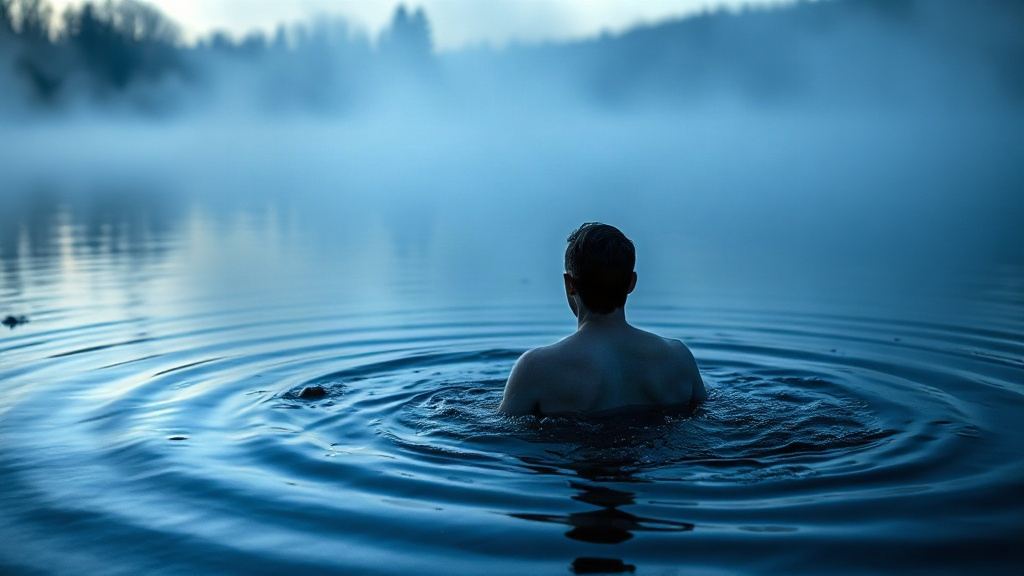
The term covers any protocol that lowers skin or body temperature in a controlled, brief way: a cold shower (50-68°F/10-20°C, 30 seconds to 3 minutes), ice water immersion (32-59°F/0-15°C, a few minutes), or whole-body cryotherapy (-166°F/-110°C, 2 to 3 minutes). What they share is a short duration and the intent to trigger an acute physiological stress, distinct from prolonged accidental hypothermia.
Research mainly distinguishes two families of protocols: cold water immersion, the most studied in a sports context, and repeated exposure over several days (acclimation), used in research on glucose metabolism. The effects measured differ depending on the family, temperature and duration chosen.
How the body reacts to cold
The first response is skin vasoconstriction, driven by the sympathetic nervous system, which limits heat loss. Within the following minute, plasma noradrenaline rises sharply: a 20-minute immersion at 57°F (14°C) multiplies its concentration by roughly three, compared with a more modest rise at 68°F (20°C) (Šrámek et al., 2000, n=8, PubMed). This surge partly explains the alertness felt right after a cold shower.
- Immediate skin vasoconstriction, followed by thermogenic shivering if the exposure continues.
- Transient rise in heart rate and blood pressure in healthy subjects.
- Activation of brown and beige adipose tissue, which can produce heat by oxidizing glucose and fatty acids: a mechanism detailed by research on a cardiac hormone involved in this conversion (PubMed).
- Release of noradrenaline and dopamine, associated with the sense of alertness reported after exposure.
What the science says about cold exposure
Five effects stand out in the available controlled trials and meta-analyses, each with a specific effect size and population.
Plasma noradrenaline triples after a 20-minute immersion at 57°F (14°C), compared with a 93% rise only at 68°F (20°C) (Šrámek et al., 2000, PubMed). This sympathetic surge subsides within a few hours and does not last beyond the session.
Insulin sensitivity rises by 43% after 10 days of cold acclimation (57-59°F/14-15°C, several hours a day) in eight patients with type 2 diabetes, alongside an increase in basal GLUT4 glucose transport in skeletal muscle (Hanssen et al., 2015, Nature Medicine, PubMed). The sample remains small and has not been confirmed in a larger cohort.
Cold water immersion reduces delayed-onset muscle soreness (DOMS) in the 24 to 96 hours after intense exercise, according to a Cochrane review covering 17 trials and more than 350 participants (Bleakley et al., 2012, PubMed). The effect on subsequent strength and performance remains uncertain according to the same authors.
Conversely, cold water immersion performed right after a resistance training session slows muscle mass gain: anabolic signaling (the mTOR pathway) is reduced at 1 hour and at 48 hours post-exercise, and muscle volume gain over several weeks of training is lower than in a control group, with no difference in maximal strength gain (Roberts et al., 2015, Journal of Physiology, n=21, PubMed).
Daily cold showers reduce sick-day absence by 29% over 90 days, according to a Dutch randomized trial of more than 3000 participants, without reducing the actual number of days people felt ill (Buijze et al., 2016, PLOS ONE, PubMed).
In practice: which protocol for which goal
The choice of temperature and duration depends on the goal; no single protocol suits every use. The table below summarizes the protocols studied and the effects measured.
| Goal | Protocol studied | Effect measured | Source |
|---|---|---|---|
| Alertness, morning wake-up | Cold shower 1-3 min, 50-59°F (10-15°C) | Noradrenaline tripled in 20 min at 57°F (14°C) | Šrámek 2000 |
| Recovery after exercise (soreness) | Immersion 50-59°F (10-15°C), 10-15 min | Soreness reduced at 24-96h | Bleakley 2012 (Cochrane) |
| Muscle mass gain | Avoid right after resistance training | Anabolic signaling slowed | Roberts 2015 |
| Blood glucose, type 2 diabetes | Acclimation 57-59°F (14-15°C), several hrs/day, 10 days | Insulin sensitivity +43% | Hanssen 2015 |
| Reduced sick-day absence | Daily cold shower 30-90 sec | Sick days -29% | Buijze 2016 |
The mechanism behind brown fat activation, detailed on our mitochondrial dysfunction pillar page, overlaps with that of another controlled thermal stress practice: sauna use, whose cardiovascular effects rest on a broader evidence base. For people who lift weights, the trade-off between recovery and muscle gain is covered in our guide to strength training after 50.
Protocol and precautions for practicing cold exposure
Starting gradually limits the risk of thermal shock and lets you gauge your own tolerance before extending the duration or lowering the temperature.
- Start with a 30-second cold shower at the end of a warm shower, then gradually extend it to 2-3 minutes.
- Never immerse yourself alone in open cold water (lake, sea, river): thermal shock raises the risk of drowning in the first few minutes.
- Space cold water immersion at least 4 to 6 hours after a resistance training session if the goal is muscle gain.
- Avoid it with unstabilized cardiovascular disease, uncontrolled hypertension, Raynaud’s syndrome, pregnancy, or right after a heavy meal.
- Ask a doctor before any extended protocol, especially for someone with diabetes who wants to try cold acclimation.
Regular physical activity remains the best-documented lever for long-term insulin sensitivity and recovery; our guide to physical activity and longevity covers the validated benchmarks.
Frequently asked questions about cold exposure
Does cold exposure help you lose weight?
It activates brown and beige adipose tissue, which can produce heat by burning glucose and fatty acids. This activation is real, but its effect on weight loss stays minimal at the durations and temperatures studied in humans. No controlled trial shows significant weight loss from cold alone, without a dietary change.
Does getting chilled make you sick?
No: cold by itself does not weaken immune defenses enough to cause a cold, according to the CDC. Winter infections are mainly driven by viruses, which spread more easily indoors during the colder months. One randomized trial even found that daily cold showers cut sick-day absence by 29%, without reducing the actual number of days people felt ill.
How long does cold exposure need to last for a measurable effect?
Studies vary depending on the effect studied. Noradrenaline rises after just 20 minutes of immersion at 57°F (14°C). The reduction in muscle soreness is documented with 10 to 15-minute immersions in 50-59°F (10-15°C) water right after exercise. The improvement in insulin sensitivity required 10 days of repeated exposure at 57-59°F (14-15°C), several hours a day, a protocol that is hard to reproduce outside a lab.
Is cold dangerous for the heart?
Cold causes vasoconstriction and a transient rise in heart rate and blood pressure, generally well tolerated in a healthy adult. In someone with unstabilized cardiovascular disease or uncontrolled hypertension, this spike can be a risk factor. Medical advice is recommended before any regular practice in these profiles.
Does cold exposure after resistance training help recovery?
It reduces soreness in the hours following exercise, according to a Cochrane review. When used systematically after a resistance training session, though, it slows anabolic signaling and muscle mass gain over several weeks of training, without affecting strength gain. It is better reserved for phases where recovery matters more than muscle gain.
Medical disclaimer. The information provided here is for informational purposes only and does not constitute medical advice. It does not replace a consultation. Ask a healthcare professional before changing your diet, taking dietary supplements or starting a new practice, especially if you have a medical condition, are pregnant or are under treatment. Dietary supplements do not replace a balanced diet or medical follow-up.