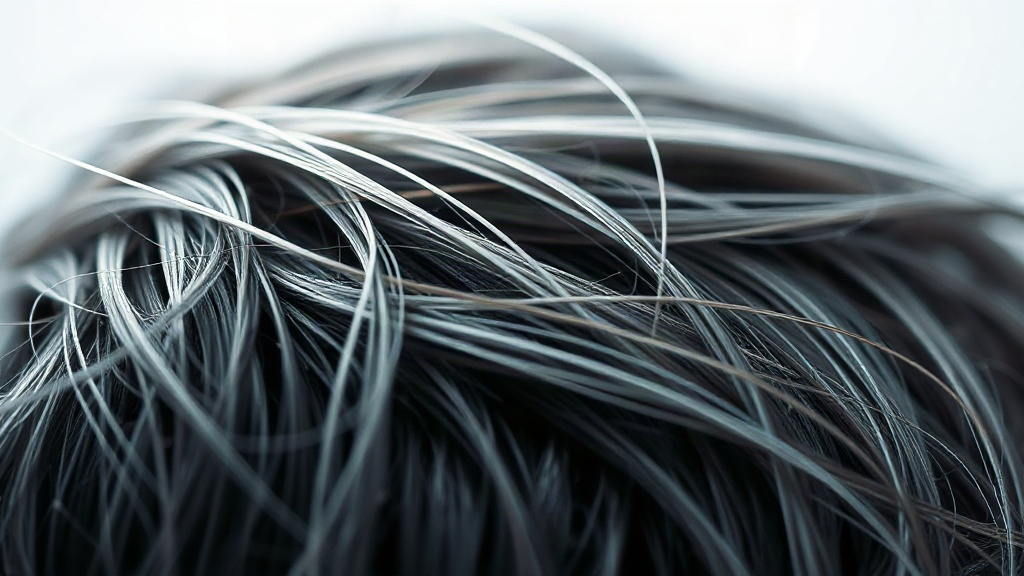
Gray hair appears when the melanocyte stem cells in the hair follicle become exhausted and stop producing the pigment that colors the hair shaft. The phenomenon affects nearly everyone after age 50, but the age of onset also depends on genetics, stress and sometimes a nutritional deficiency. This piece details the biological mechanism, what published studies show, and the actions that actually make a difference.
In brief – Gray hair, medically called canities, results from the progressive exhaustion of melanocyte stem cells housed in the hair follicle: they stop producing the melanin that pigments the hair shaft. The process is largely genetic, the IRF4 gene appears to account for part of the risk of early graying, but chronic stress seems to speed it up: a 2020 study showed in mice that a surge of norepinephrine can exhaust these stem cells within days. Smoking is associated with earlier, more pronounced graying. No supplement can restore color to an already white hair in someone without a deficiency; only correcting a confirmed deficiency, particularly in vitamin B12, can restore partial pigmentation in rare documented cases. Managing aggravating factors and accepting the process remain the most realistic options today.
Definition
Canities is the medical term for gray hair: the progressive, hair-by-hair loss of the melanin pigment that gives the hair shaft its color. It almost always starts at the temples, then spreads across the scalp over the years. Dermatologists distinguish physiological canities, linked to age, from premature canities, defined in several clinical studies as the appearance of the first gray hairs before age 30. A hair does not turn gray gradually: it grows in white from the root as soon as the melanocyte that fed it has stopped functioning or disappeared.
Mechanism: why gray hair appears as stem cells wear out
The mechanism behind the condition rests on the exhaustion of melanocyte stem cells (MeSCs) housed in the bulge of the hair follicle, a niche that normally protects them at rest between growth cycles. In each cycle, some of these stem cells must differentiate into mature melanocytes to pigment the new hair, while others must self-renew to supply future cycles. Work by Nishimura and colleagues showed that this self-renewal mechanism becomes incomplete with age: the stem cells differentiate permanently instead of being maintained in the niche, until the local stock is fully depleted.
- Genetics: the IRF4 gene, linked to melanin production, is thought to account for about 30% of the variability in the age it first appears between individuals.
- Chronic stress: overactivation of the sympathetic nervous system can exhaust melanocyte stem cells through an excessive surge of norepinephrine, speeding up the onset of graying.
- Smoking: the oxidative stress caused by cigarette smoke is associated with earlier, more extensive graying.
- Nutritional deficiencies: vitamin B12, copper or iron, in cases of a confirmed deficiency, which is generally rare in a well-nourished person.
- Autoimmune diseases: vitiligo or certain forms of thyroiditis can locally speed up the loss of melanocytes.
What the science shows
The foundational discovery dates back to 2005: Nishimura and team demonstrated, in transgenic mice and aging human follicles, that canities results from a maintenance defect in melanocyte stem cells within their niche rather than simple wear on mature melanocytes (Nishimura et al., 2005, Science). In 2020, a Harvard team clarified the role of stress: in mice, an acute surge of norepinephrine from the sympathetic nervous system triggers proliferation, then migration and permanent loss of melanocyte stem cells within days (Zhang et al., 2020, Nature). In humans, a 2021 study tracked the pigmentation of individual hairs to the millimeter in volunteers who kept a stress diary: some hairs lost then regained their color in step with reported stress fluctuations, suggesting repigmentation remains possible as long as the stem cell is not completely destroyed (Rosenberg et al., 2021, eLife). On the genetic side, an analysis of more than 6,000 volunteers from Latin America identified the IRF4 gene as the first locus linked to gray hair, explaining part but not all of an individual’s risk (Adhikari et al., 2016, Nature Communications). Smoking also emerges as an associated factor: in a cross-sectional study of 207 people, smokers had 2.5 times the risk of premature graying compared with non-smokers (study, 2013, Indian Dermatology Online Journal). On the related topic of vitiligo, MedlinePlus documents the mechanisms behind the loss of skin melanocytes (MedlinePlus, Vitiligo).
In practice: dealing with gray hair
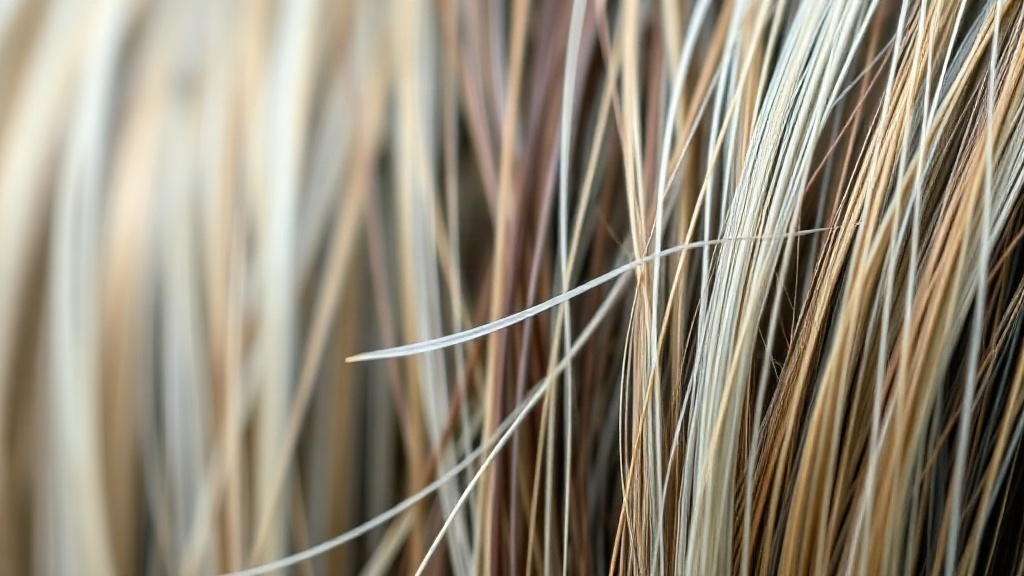
No routine can restore color to gray hair whose melanocyte stem cells have completely disappeared: at that stage, the process described in the Stem Cell Exhaustion pillar is irreversible with current means. That said, some levers have a measurable effect on how fast it appears or, in rare cases, on partial repigmentation. A targeted blood panel (vitamin B12, ferritin, TSH) is genuinely useful in cases of unusually early graying, especially when it comes with fatigue or paleness, as detailed in our article on vitamin B12 deficiency. Managing chronic stress, whose biological role is increasingly well documented, also deserves attention, see our feature on chronic stress and longevity. The table below summarizes the main factors and the realistic levers tied to each.
| Factor | Role in graying | Realistic lever |
|---|---|---|
| Genetics (IRF4 and other loci) | Accounts for a large share of the risk, not modifiable | None |
| Age | Dominant factor after age 50 | None, a physiological process |
| Chronic stress | Speeds up stem cell exhaustion (mouse model) | Sleep, physical activity, stress management |
| Smoking | Associated with earlier onset (2.5 times the risk in one study) | Quitting smoking |
| B12, copper or iron deficiency | Rare cases, partial repigmentation possible after correction | Blood panel, targeted correction under medical advice |
| Autoimmune disease (vitiligo, thyroiditis) | Can locally speed up melanocyte loss | Medical advice, dermatological follow-up |
Protocol: the steps that actually help
For hair that turns gray early or markedly, a handful of simple steps have a stronger scientific basis than most cosmetic promises.
- Ask for a blood panel (vitamin B12, ferritin, TSH) if graying is premature or comes with other symptoms.
- Quit smoking, repeatedly linked to earlier graying.
- Work on sleep and chronic stress load, two biologically plausible levers based on current data.
- See a dermatologist for very localized, sudden graying, which can signal an underlying autoimmune condition.
- Consider coloring or highlights as a legitimate cosmetic solution for graying hair, without expecting an effect from a supplement that it cannot deliver.
Frequently asked questions
At what age does gray hair first appear?
The age varies widely depending on genetics and ethnic background. Several clinical studies define canities as premature when the first white hairs appear before age 30. After age 50, most people show visible graying, without this reflecting any particular health problem.
Can stress really cause premature graying?
In mice, a 2020 study showed that a stress-related surge of norepinephrine exhausts melanocyte stem cells within days. In humans, a 2021 study observed that some white hairs can regain their color when reported stress levels drop, suggesting a real but still poorly quantified link in humans.
Can a vitamin B12 deficiency cause gray hair?
A confirmed vitamin B12 deficiency can reduce melanin production and contribute to premature graying in rare documented clinical cases. Correcting the deficiency has, in some reported cases, allowed partial repigmentation. A blood panel remains necessary before any supplementation.
Can white hair naturally regain its color?
Once the melanocyte stem cell is completely exhausted, no known method durably restores pigmentation to a white hair. Only correcting a confirmed nutritional deficiency or, based on preliminary observations, a marked reduction in chronic stress have been associated with partial, localized repigmentation.
Does plucking a white hair make more white hairs appear?
No, this common belief has no biological basis. Each hair follicle works independently: plucking a white hair cannot change the pigmentation of neighboring follicles. The new hair that grows back in that spot will be gray or colored depending on the state of its own melanocyte stem cell, not the act of plucking.
Medical disclaimer. The information provided here is for informational purposes only and does not constitute medical advice. It does not replace a consultation. Ask a healthcare professional before changing your diet, taking dietary supplements or starting a new practice, especially if you have a medical condition, are pregnant or are under treatment. Dietary supplements do not replace a balanced diet or medical follow-up.