Parkinson’s disease affects about 167,000 people currently treated in France, with 25,000 new diagnoses every year (Inserm, 2015). The disease results from the progressive death of dopamine-producing neurons in the brain. Six risk factors are now supported by cohort studies, meta-analyses and large-scale genetic research: advancing age, male sex, genetics, pesticide exposure, head trauma and a high intake of low-fat dairy products.
In brief – Parkinson’s disease is a neurodegenerative condition that progressively destroys dopamine-producing neurons, causing tremor, slowed movement and muscle stiffness. Six risk factors are validated by scientific research: advanced age (risk climbs sharply after 60), male sex (higher incidence in men), a genetic predisposition (GBA and LRRK2 mutations, family history in 15% of cases), occupational exposure to pesticides (rotenone, paraquat), repeated head trauma and a high intake of milk or low-fat dairy products. None of these factors determines the disease on its own: they are statistical probabilities, not individual certainties.
What Is Parkinson’s Disease?
The condition is the second most common neurodegenerative disease after Alzheimer’s. It affects the central nervous system and progresses slowly, often for years before diagnosis. The first motor symptoms appear only after the loss of about 50% to 60% of the dopamine-producing neurons in a brain region called the substantia nigra.
The clinical picture combines resting tremor, slowed movement (bradykinesia), muscle rigidity and balance problems. Non-motor signs often precede these symptoms by several years: loss of smell, constipation, and rapid eye movement sleep behavior disorder. The condition remains very rare before age 45; incidence peaks between 85 and 89.
How Parkinson’s Disease Develops in the Brain
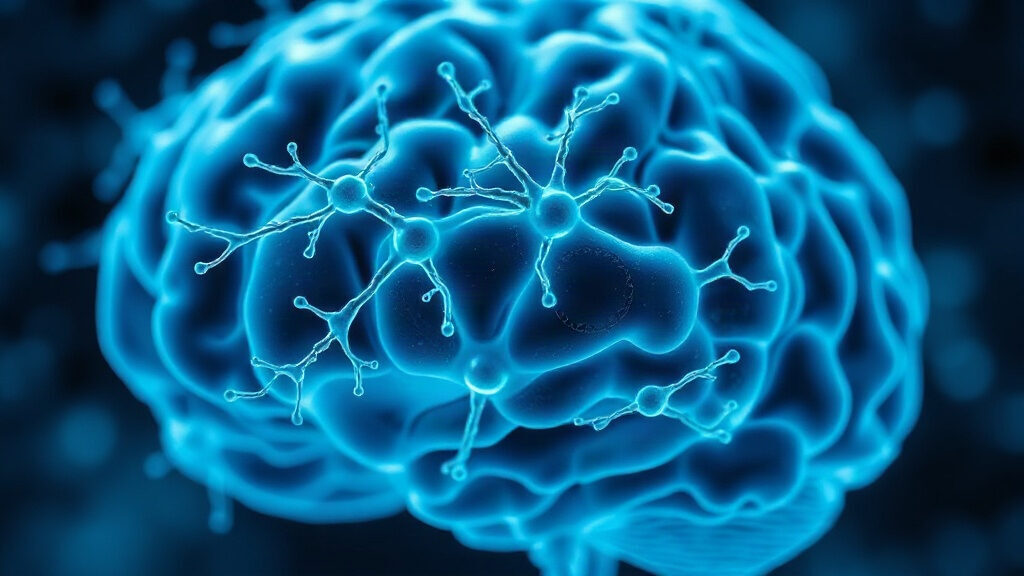
The central mechanism involves the abnormal buildup of a protein called alpha-synuclein, which misfolds and forms toxic clumps known as Lewy bodies inside neurons. This failure to properly fold and clear damaged proteins, known as loss of proteostasis, weakens and eventually kills dopamine-producing neurons.
- Missing dopamine disrupts the coordination of voluntary movement.
- Lewy bodies gradually spread from the brainstem toward the cortex.
- Oxidative stress and mitochondrial dysfunction worsen neuronal death.
- Chronic inflammation in the brain sustains the process.
This protein buildup explains why certain environmental risk factors, by disrupting mitochondria or promoting oxidative stress, speed up the process in people who are already genetically vulnerable.
What the Science Says: 6 Validated Risk Factors
A review of the literature identifies six factors whose association with Parkinson’s disease rests on solid evidence from cohort studies, case-control studies and meta-analyses.
1. Advanced age. This is the strongest risk factor for the disease. Incidence rises with each decade and peaks around age 85 to 89, according to the National Institute on Aging. A meta-analysis of 27 studies confirms this steady rise with age in both sexes (Hirsch et al., 2016).
2. Male sex. Men develop the condition more often than women, with a statistically significant difference between ages 60 and 79 according to the same meta-analysis (Hirsch et al., 2016). Proposed explanations include a protective effect of estrogen and historically higher occupational exposure to toxic substances among men.
3. Genetic predisposition. A family history is present in 15% of patients, and a single genetic cause explains 5% to 10% of cases, through genes such as SNCA, LRRK2, PRKN, PINK1 or GBA (Jia et al., 2022). A meta-analysis of nearly 38,000 cases identified 90 independent genetic risk signals, accounting for 16% to 36% of heritable risk (Nalls et al., 2019).
4. Pesticide exposure. A case-control study nested within the American Agricultural Health Study found an association between Parkinson’s disease and the use of pesticides that inhibit mitochondria, notably rotenone (OR = 2.5, 95% CI: 1.3 to 4.7) and paraquat (OR = 2.5, 95% CI: 1.4 to 4.7) (Tanner et al., 2011). In France, this link has been officially recognized since 2012: it is listed as an occupational disease for farmers exposed to pesticides for at least ten years.
5. Head trauma. In patients aged 55 and older, a head injury raises the risk of a later diagnosis by 44% compared with a trauma that did not affect the brain (HR = 1.44, 95% CI: 1.31 to 1.58), with a dose-response effect: the more severe or repeated the impact, the higher the risk (Gardner et al., 2015).
6. High intake of low-fat dairy products. In a large American cohort, drinking at least three servings of milk or skim dairy products a day was associated with a higher risk (HR = 1.34, 95% CI: 1.01 to 1.79) compared with no consumption, a finding confirmed by meta-analysis (Hughes et al., 2017). The mechanism remains debated; one hypothesis points to pesticide residues found in milk rather than calcium or dairy proteins themselves.

| Factor | Type of evidence | Estimated relative risk |
|---|---|---|
| Advanced age (peak 85 to 89) | Meta-analysis, 27 studies | Steady rise with age |
| Male sex | Meta-analysis, 27 studies | Significant between ages 60 and 79 |
| Genetic mutations (GBA, LRRK2, SNCA…) | GWAS, 38,000 cases | 16% to 36% of heritable risk |
| Pesticides (rotenone, paraquat) | Case-control study | OR 2.5 for each substance |
| Head trauma after age 55 | Cohort, dose-response effect | HR 1.44 (+44%) |
| Low-fat dairy (3+ servings/day) | Cohort plus meta-analysis | HR 1.34 |
In Practice: What to Do With These Risk Factors
Two of the six risk factors cannot be changed: age and sex. The other four offer concrete room for action, even though none guarantees full protection against the disease.
People occupationally exposed to pesticides (farming, gardening, groundskeeping) can reduce their exposure with personal protective equipment and by respecting re-entry intervals after treatment. A family history is worth discussing with a doctor, though routine genetic testing is not recommended in the absence of symptoms. Preventing falls and wearing a helmet while cycling or during contact sports limits head trauma, whose dose-response effect has been demonstrated. On the diet side, nothing requires cutting out dairy entirely: the documented association mainly concerns a high, repeated intake of skim milk, not an occasional serving of yogurt or cheese.
Regular physical activity is among the few levers associated with slower motor progression in people already diagnosed, though it has not been proven to prevent the disease from developing in the first place. Managing chronic inflammation remains an active area of research, since neuroinflammation accompanies the loss of dopamine-producing neurons. Certain early signs, such as loss of smell or rapid eye movement sleep disorders, warrant medical advice when they occur alongside a family history.
| Category | Factors involved | Room for action |
|---|---|---|
| Non-modifiable | Age, sex, inherited genetics | Monitoring early signs, medical discussion if there is a family history |
| Modifiable or avoidable | Pesticides, head trauma, excess low-fat dairy | Personal protection, injury prevention, dietary moderation |
Protocol: Reducing Parkinson’s Disease Risk Day to Day
- Wear gloves, a mask and covering clothing whenever handling pesticides, and respect re-entry intervals on a treated field.
- Choose appropriate protection, such as a helmet, for activities with a risk of falls or head impact: cycling, skiing, contact sports.
- See a neurologist for resting tremor, unexplained loss of smell or rapid eye movement sleep disorders combined with a family history of Parkinson’s disease.
- Keep up regular physical activity, which several studies link to slower progression of motor symptoms in diagnosed patients.
- Do not overreact to normal milk or cheese consumption: the scientific signal concerns high, sustained daily intake, not moderate consumption.
Frequently Asked Questions
Is Parkinson’s disease hereditary?
Rarely in a direct way. A family history is present in 15% of patients, and a single genetic mutation explains 5% to 10% of cases (SNCA, LRRK2, PRKN, PINK1 and GBA genes). In the vast majority of cases, the disease results from a combination of minor genetic predispositions and environmental factors, not a single gene passed directly from parent to child.
Are pesticides a recognized cause of the disease?
In France, occupational exposure to pesticides has been recognized as a risk factor since 2012, through the official schedule of agricultural occupational diseases. Studies show that certain substances, such as rotenone and paraquat, roughly double the risk, provided exposure lasts at least ten years.
Can an old head injury trigger Parkinson’s disease years later?
A study of patients aged 55 and older found a 44% higher risk of a later diagnosis after a head injury, compared with a trauma that did not affect the brain. The effect appears over 5 to 7 years of follow-up and increases with the severity and repetition of impacts.
Should I stop eating dairy products to lower my risk?
No, no guideline justifies cutting dairy out entirely. The association found in studies concerns a high, repeated intake of milk or skim dairy products, not moderate consumption. The mechanism has not been firmly established and may involve environmental residues rather than the dairy product itself.
At what age do the first symptoms of Parkinson’s disease usually appear?
The condition remains very rare before age 45. Incidence then rises gradually with each decade and peaks between 85 and 89. The first motor symptoms appear only after the loss of roughly half of the relevant dopamine-producing neurons, which explains why diagnosis often comes late relative to the true onset of the neurodegenerative process.
Medical disclaimer. The information provided here is for informational purposes only and does not constitute medical advice. It does not replace a consultation. Ask a healthcare professional before changing your diet, taking dietary supplements or starting a new practice, especially if you have a medical condition, are pregnant or are under treatment. Dietary supplements do not replace a balanced diet or medical follow-up.