Brown fat has intrigued metabolic physiologists since 2009, when researchers rediscovered its activity in healthy adults. Unlike white fat, which stores energy, this tissue burns it to produce heat. Three levers have been tested in human trials to stimulate its activity: controlled cold exposure, chili pepper capsinoids, and a drink combining green tea catechins and caffeine. A fourth lever, often cited but rarely checked, does not hold up against the published data.
In brief – Brown fat is an adipose tissue rich in mitochondria that burns calories to produce heat, unlike white fat, which stores them as an energy reserve. Identified by PET-CT imaging in healthy adults in 2009, it interests researchers for its role in thermoregulation and energy expenditure. Three interventions show a measured, reproducible effect in human trials: repeated cold exposure raises its volume and thermogenesis by several dozen percent within days, a dose of chili pepper capsinoids increases energy expenditure in people whose tissue is already active, and a drink combining green tea catechins and caffeine doubles cold-induced thermogenesis after five weeks. Exercise, by contrast, does not activate this tissue in humans and can even reduce its measured activity.
Definition: What Is Brown Fat
Brown fat is an adipose tissue distinct from white fat in both function and cellular makeup. Its adipocytes contain many small lipid droplets and a high density of iron-rich mitochondria, which give the tissue its characteristic brown color and its ability to produce heat rather than store energy.
Long considered a tissue reserved for infants, where it protects against neonatal hypothermia, this tissue was confirmed active in healthy adults in 2009 by several teams using fluorodeoxyglucose PET-CT imaging, including Saito et al. and van Marken Lichtenbelt et al., published in the New England Journal of Medicine.
Mechanism: How This Tissue Produces Heat
This tissue activates through non-shivering thermogenesis: its mitochondria express a protein, UCP1, that short-circuits normal ATP production to release energy as heat directly inside the cell. The starting signal comes from the sympathetic nervous system, triggered by a drop in skin-sensed temperature or by certain food compounds.
- Mitochondrial uncoupling: UCP1 opens a channel in the inner mitochondrial membrane, preventing the proton gradient from producing ATP and turning it into heat instead.
- Sympathetic activation: cold triggers the release of norepinephrine, which binds to beta-adrenergic receptors on brown adipocytes.
- Progressive recruitment: repeated exposure increases the number of active mitochondria and the detectable volume of the tissue, a change measurable within just a few days.
Separate research has identified a second activation pathway, independent of the sympathetic nervous system: atrial natriuretic peptide, a hormone released by the heart in response to cold, also triggers the breakdown of lipids stored in brown adipocytes to produce heat. This heart-hormone pathway adds to the broader picture of cardiovascular and metabolic health covered by the National Heart, Lung, and Blood Institute.
This organization clearly separates this tissue from white fat across several measurable points.
| Characteristic | Brown fat | White fat |
|---|---|---|
| Main function | Heat production | Energy storage |
| Mitochondrial density | High | Low |
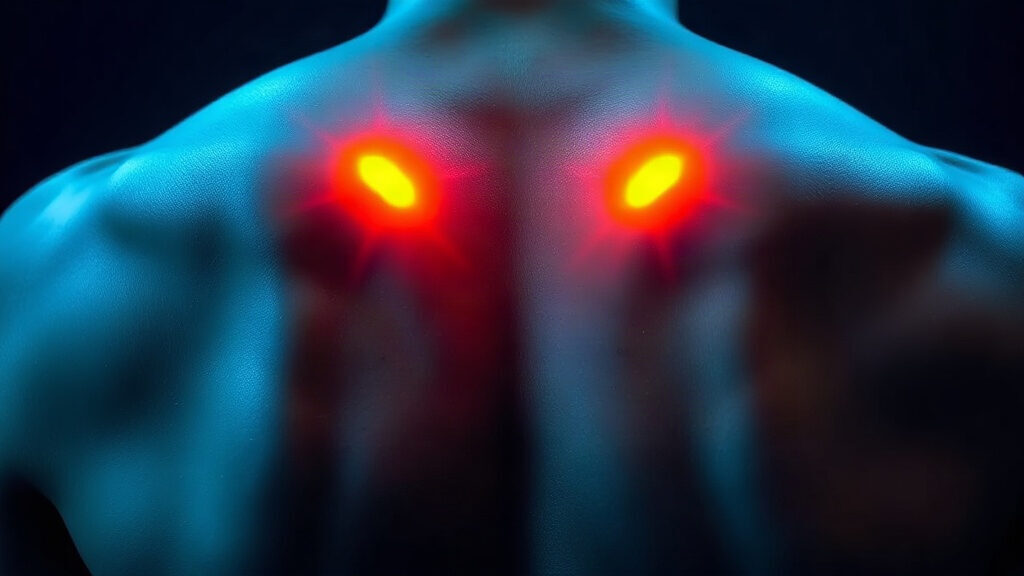
| Location in adults | Neck, supraclavicular, paravertebral areas | Distributed throughout the body |
| Response to cold | Activation and recruitment | Little direct response |
What the Science Shows: Three Levers Tested in Humans
Three interventions have shown a direct, imaging-measured effect on the activity or volume of this tissue in controlled trials in adults. A fourth, widely repeated in the popular press, does not hold up under scrutiny of the published data.
Cold exposure remains the best-documented lever. Among 24 men exposed to a temperature near the shivering threshold, this tissue activated in 23 of them, with markedly lower activity in overweight subjects (van Marken Lichtenbelt et al., 2009). A ten-day acclimation at 15 to 16°C (59 to 61°F), six hours a day, then raised non-shivering thermogenesis from 10.8% to 17.8% of total energy expenditure, and the detectable volume of the tissue increased by 37% (van der Lans et al., 2013).
Capsinoids, non-pungent analogs of chili pepper capsaicin, specifically increase energy expenditure in people whose activity in this tissue is already detectable at rest: +15.2 kJ/hour after a single dose, compared with +1.7 kJ/hour in subjects with no measurable activity, and no effect from placebo (Yoneshiro et al., 2012).
A drink combining 615 mg of green tea catechins and 77 mg of caffeine, taken twice a day for five weeks, raised cold-induced thermogenesis from 92 to 198 kcal a day in subjects with low baseline activity, with no change under placebo (Yoneshiro et al., 2017).
Exercise, however, does not recruit this tissue according to available PET-CT data. Six sessions of intense training over two weeks improved neither its volume nor its glucose uptake in 18 men, and even reduced it in subjects whose activity was initially measurable (Motiani et al., 2017). A comparison of endurance athletes and lean sedentary controls confirms lower activity in trained athletes during an identical cold exposure (Vosselman et al., 2015). The hypothesis of white fat “browning” via irisin, proposed in mice (Boström et al., 2012), has not been confirmed by a comparable activation in trained humans. Regular physical activity remains valuable for overall metabolic health, as the World Health Organization notes, just not through this specific pathway.
In Practice: Comparing the Three Levers and Where They Fit
The table below summarizes the studied protocol, the measured effect, and the tested population for each of the three levers whose effect on this tissue is confirmed by imaging.
| Lever | Studied protocol | Measured effect | Tested population |
|---|---|---|---|
| Controlled cold | 15-16°C (59-61°F), 6h/day, 10 days | Tissue volume +37%, thermogenesis +64% | 17 healthy adults |
| Capsinoids (chili pepper) | 9 mg single dose | Energy expenditure +15.2 kJ/h | 18 men, tissue already active |
| Catechins + caffeine | 615 mg + 77 mg, 2x/day, 5 weeks | Cold-induced thermogenesis x2.1 | 10 adults with low baseline activity |
These three levers act on a shared mechanism, the mitochondrial recruitment described in our mitochondrial dysfunction pillar. Our article on cold exposure details the cold bath and cold shower protocols used in other contexts, beyond this one tissue. Urolithin A, a postbiotic studied for its direct mitochondrial action, targets a related mechanism but has not been specifically tested on this tissue. For the exercise side of the equation, our guide to physical activity and longevity remains relevant for overall cardiometabolic health, independent of its null effect on this specific tissue.
Protocol: Simple, Cautious Steps
None of these levers reshapes the body on its own: the energy contribution of this tissue stays modest compared with an adult’s total expenditure. Working them into daily life is nonetheless accessible without any equipment.
- Lower indoor heating by a few degrees or finish a shower with thirty seconds of cool water, done gradually and repeatedly rather than as a single intense exposure.
- Spend time lightly dressed in a cool environment before automatically reaching for an extra layer.
- Eat spicy chili dishes occasionally, without exceeding a comfortable digestive tolerance.
- Swap a sugary drink for brewed green tea, paired with a moderate source of caffeine if tolerated.
People with cardiovascular disease, poorly controlled high blood pressure, or a thermoregulation disorder should ask a doctor before any prolonged cold exposure: the cardiovascular stress caused by shivering is not trivial for these profiles.
Frequently Asked Questions
What distinguishes brown fat from beige fat?
Beige fat refers to clusters of cells that appear within white fat under the effect of cold or certain hormonal signals, without reaching the mitochondrial density of classic brown fat. In adults, most of the tissue detected by imaging in the neck and supraclavicular areas shows characteristics between the two types.
Does cold exposure really help you lose weight through brown fat?
This tissue consumes energy to produce heat, but its contribution stays small compared with an adult’s total energy expenditure, on the order of a few dozen to a few hundred kilocalories a day depending on the study. Cold mainly shifts how energy expenditure is distributed, not a standalone weight-loss lever.
Does exercise activate brown fat, despite a common belief?
Available imaging data show the opposite: short-term training does not improve the activity of this tissue and can even reduce it in subjects who were initially active, while endurance athletes show lower activity than comparable sedentary people during the same cold exposure. Exercise remains beneficial for overall metabolic health, just not through this specific mechanism.
Can you measure your own amount of brown fat?
The only validated method remains fluorodeoxyglucose PET-CT imaging performed at a specialized center after controlled cold exposure, an expensive exam reserved for clinical research. No home, blood, or wearable test reliably measures the activity of this tissue in an individual today.
Is eating spicy chili food enough to activate brown fat day to day?
The studies that showed an effect used standardized doses of capsinoids, non-pungent chili pepper analogs, given under controlled conditions, not ordinary and variable consumption of spicy meals. The observed effect also depends on each person’s baseline tissue activity, which makes the individual response hard to predict outside a laboratory.
Medical disclaimer. The information provided here is for informational purposes only and does not constitute medical advice. It does not replace a consultation. Ask a healthcare professional before changing your diet, taking dietary supplements or starting a new practice, especially if you have a medical condition, are pregnant or are under treatment. Dietary supplements do not replace a balanced diet or medical follow-up.